Showing posts with label insects. Show all posts

Sunday, January 26, 2025

Books that Expanded My Outlook in 2023

So I shared brief summaries of the environmental books that I read in 2024 in my last post, but I kept thinking about some of the excellent books I read in 2023, too.  Adding them all to one post seemed too clunky, so I decided to wax enthusiastic over my 2023 reads in this separate post.

Looking over my 2023 list, I was struck by how much more "natural history" I read than in 2024.
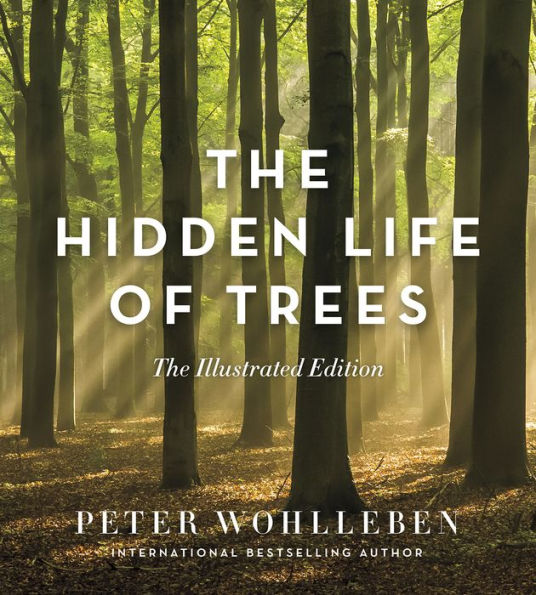

The Hidden Life of Trees: The Illustrated Edition

The Hidden Life of Trees:  The Illustrated Edition, by Peter Wohlleben, Greystone Books Ltd./David Suzuki Institute, 2015/2016/2018. 

   The text in this edition is abridged from the original (and I still need to find and read the original), but the photographs are sublime.  This book is an excellent and easily readable introduction to forest ecology, incorporating many of the recent breakthroughs in our knowledge. (Note:  Peter Wohlleben is an author and has worked for the forestry commission in Germany for over 20 years.  He now manages a forest academy and a natural woodland in Germany.)

What did I gain from reading this book?  Just opening this book and looking at the gorgeous photos relaxes me.  It is absolutely beautiful.  More than simply being a "pretty face", though, this book was a great summary of the workings of forests.
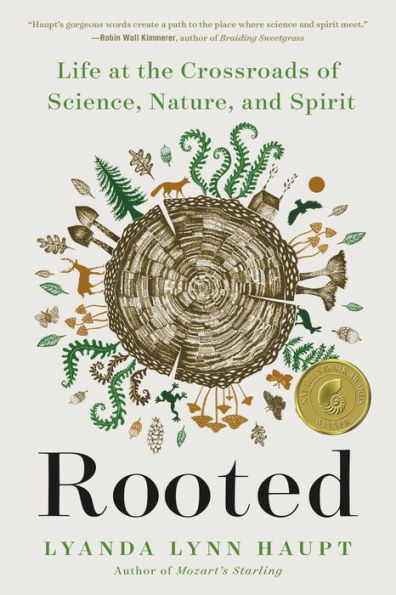

Rooted: Life at the Crossroads of Science, Nature, and Spirit

Rooted: Life at the Crossroads of Science, Nature, and Spirit, by Lyanda Lynn Haupt,  Little, Brown Spark/Hachette Book Group, 2021.

    Rooted is very different from the other books that I have talked about here.  It is based in science, but it is also part philosophy, part spiritual guidance, and part nature guide.  Weaving in quotes from a wide variety of people like Mary Oliver, John O'Donoghue,  Robert Macfarlane, Merlin Sheldrake, and Richard Louv, this book is a rich tapestry from which to draw inspiration and a deep sense of connection with the natural world.

What did I gain from reading this book?  As I read this book, I felt a variety of strands from my life and my reading come together in new ways, highlighting possibilities and encouraging changes in the way I relate to the natural world.  After I finish reading a book, assuming I decide to keep it, I store each one in a  different area, based on how I think I'll access or use it in the future:  plant or animal reference book, general ecological principles, environmental commentary, gardening, poetry, and so forth.  This book is one of the few I keep at my bedside so that I can dip into it for inspiration and rejuvenation when I'm feeling my well run dry.
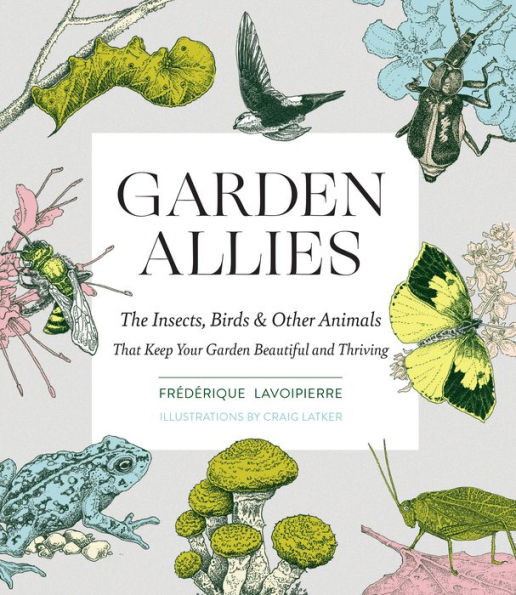
 

Garden Allies: The Insects, Birds, and Other Animals That Keep Your Garden Beautiful and Thriving

Garden Allies: The Insects, Birds & Other Animals That Keep Your Garden Beautiful and Thriving, by Frederique Lavoipierre, Timber Press, Portland, Oregon, 2021.

    A chapter subheading sums up this book well:  "Actors on Your Garden's Stage".  While other books I read in 2023 talked about all the insects and other animals that share life in and on trees, this book does the same for our gardens.  If you read this book, you'll recognize many, many more of the "little  guys" you see in your garden.  (Note:  Frrederique Lavoipierre has a Masters Degree in Biology with an emphasis on ecological principles of sustainable landscaping;  she was written and worked in this field in numerous capacities.)

What did I gain from reading this book?  Garden Allies was a wonderful introduction to a wide variety of the beings that we see in our yards and gardens.  It would be especially useful for someone wanting to learn more about the variety of "bugs" they encounter in their garden.
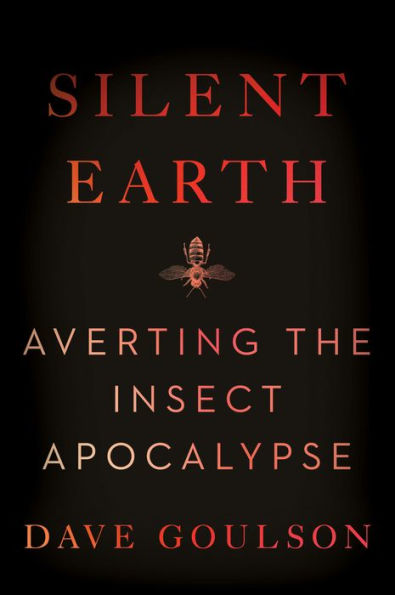

Silent Earth: Averting the Insect Apocalypse

Silent Earth: Averting the Insect Apocalypse, by Dave Goulson, Harper (HarperCollins), 2021.

    For me, this is simply the best book on what's going on with insect declines.  Not only is there good information on insects themselves, there is excellent background on pesticides and changing farming practices, how artificial fertilizers affect insects, the effects of climate change, and the surprising problem of light pollution.  One of the most memorable sections of this book was Goulson's imaginative trip 50-60 years into the future, pondering what life might be like then if we didn't manage to protect insects now.  The last section of this book is titled "What Can We Do?" and, in it, Goulson outlines specific tasks that we can each do to help protect insect populations.  (Note:  Dave Goulson is Professor of Biology at the University of Sussex in Great Britain.)

What did I gain from reading this book?  Simply put, while Milman's book, The Insect Crisis, was good, this book was excellent at defining the problem of insect decline and also, critically, on giving us concrete suggestions that we each can do to avert the "insect apocalypse".

The New Climate War: The Fight to Take Back Our Planet

The New Climate War: The Fight to Take Back Our Planet, by Michael E. Mann, PublicAffairs (Hachette Book Group), 2021.

    Michael Mann is a climate scientist who has, for decades, been at the forefront of trying to awaken our country to the looming reality of the climate crisis.   This book is about the history of our understanding about global warming and the history of the fight against action to solve this extreme threat to our world.   This is a call to action, and Mann emphasizes that it is NOT too late to act; he helps us see the way forward.  He is adamant that solving the climate crisis will take more than individual action, and he points us in the direction we need to work. (Note:  Michael E. Mann is a Professor of Atmospheric Science at Penn State.)

What did I gain from reading this book?  Having read about Mann's climate work for decades, I found it fascinating to read his story of how climate policies have been submarined by the fossil fuel industry over the years.  The tactics the industry has used have been impressively effective.  Mann himself has been personally vilified in the industry's quest to "Damn the torpedoes and full speed ahead!"  We don't think of scientists as warrior heroes, but Mann has been at the forefront of this battle, fighting for the future for all of us.   

The Comfort of Crows (Reese's Book Club Pick): A Backyard Year

The Comfort of Crows: A Backyard Year, by Margaret Renkl, Spiegel & Grau, New York, 2023.

    Accompanied by a series of delightful artworks depicting nature, this book is a collection of thoughtful and poignant essays on the wildlife all around us in our home landscapes.  Tales of ecstasy and tragedy, musings filled with love and concern, every time I think of reading this book, I reflexively smile.  (Note:  Margaret Renkl is the author of several books and a contributing writer for the New York Times.)

What did I gain from reading this book?  This book gave me beauty and richness and a sense of camaraderie with the author.
   

The Hidden Company That Trees Keep: Life from Treetops to Root Tips

The Hidden Company That Trees Keep: Life from Treetops to Root Tips, by James B. Nardi, Princeton University Press, 2023.

    When I look at a tree, I look for the animals in and around it, too.  Until I read this book, I usually saw just birds, squirrels, and maybe a few caterpillars.  In this book, Nardi goes much deeper, showing the interconnected webs of hundreds of organisms that are supported by each tree and that support the tree, as well.  He takes each part of the tree and describes the other organisms interacting with that part specifically:  leaves, twigs & buds, the circulatory system, the trunk, the roots, the flowers & fruits.  Who makes galls?  How do trees respond to insect or disease attacks?  What animals help the trees protect themselves?  The richness and diversity Nardi describes are breathtaking. (Note:  James Nardi is a research scientist in biology at the University of Illinois, Urbana-Champaign.)

What did I gain from reading this book?  I love taking walks around our yard and photographing every animal I can find, big or small.  Many of the animals I find are small...and odd looking to my eyes.  This book helped me understand the complex interactions between the animals I observe and the trees in our yard.  I underlined so much as "important - I want to remember this" that there's hardly a page I haven't marked in some way!
 

Wildscape: Trilling Chipmunks, Beckoning Blooms, Salty Butterflies, and other Sensory Wonders of Nature

Wildscape: Trilling Chipmunds, Beckoning Blooms, Salty Butterflies, and Other Sensory Wonders of Nature, by Nancy Lawson, Princeton Architectural Press, 2023.

    Evocative is the best word I can come up with to describe Nancy Lawson's latest book.  In the grand scheme of things, her Maryland garden doesn't lie all that far from our southeast Virginia one, so she almost feels like a next door neighbor as she talks about the plants and animals in her yard.  And the stories she tells!  Flea beetles helping monarchs in their quest for protective chemicals from milkweeds.  Chipmunks and mice spreading mycorrhizal fungi that connect and nurture plants.  The difference between the songs of "city birds" and "country birds" in the white-throated sparrow population.  The rich discoveries in this book give an increased depth to my experiences in the landscape. (Note: Nancy Lawson is an author, conservationist, and lecturer.)

What did I gain from reading this book?  Nancy Lawson has the gift of loving the unloved - and helping me to love them too.  I see certain plants and animals with new eyes after reading her books or listening to her lectures.  In this book, she took me on a fascinating nature walk, helping me decode some of the behavior or animal traces that I see...or hear...or smell...or touch in the landscape, while helping me appreciate the complexity of plant-animal relationships even more deeply. 


So many books, so little time.....

I hope you're able to find the time to pick up one or more of these books so you can enjoy them too.


Wednesday, January 08, 2025

Books That Enlarged My Outlook in 2024

Thanks to an annual challenge published by the reading challenge group, The 52 Book Club, I have started reading a LOT more in the last several years.  While most of the books I've read have been fiction, I have also read some interesting non-fiction along the way - and, of course, some of my favorite non-fiction books have to do with the environment,  I thought I'd share my favorite environmental reads from 2024.


The Nation of Plants, by Stefano Mancuso, Other Press LLC, New York, 2019/2021.  

    Sometimes I read a book that completely shifts a facet of how I understand the world.  This small book created such a shift in me.  I've always considered animals to be "more advanced" than plants, and thus "more important" somehow.  However, recent research has certainly been expanding our understanding of plants significantly.  Going a step further, this book posits, successfully in my view, that plants are by far the most important living beings on Earth.  "We exist thanks to plants, and we will continue to be able to exist only in their company.  It behooves us to keep this idea clear at all times."  Mancuso starts from that premise and goes on to create a Constitution for The Nation of Plants, imaginatively raising environmental truths to the level of international law.  (Note: Mancuso is a plant neurobiologist at the University of Florence, Italy.)

What did I gain from reading this book?  Reading this book changed my fundamental understanding of the importance of plants compared to animals.


The Insect Crisis, by Oliver Milman, W. W. Norton & Company, 2022.  

    Starting with a brief vision of what would (will?) happen to humans if all insects disappear, Milman goes on to look at the research studies behind recent dire headlines about the significant insect declines being observed.  He shares stories and studies from across the planet.  Then Milman examines the threats that are causing those insect declines, from farming practices to light pollution to global warming, pointing out that many of these threats are voluntary choices we make, so different choices could be made that would be less destructive.  The importance of making those different choices is Milman's ultimate point, a message we should all take to heart.  (Note:  Milman is a British journalist who specializes in the environment.)

What did I gain from reading this book?  In reading this book, I increased my knowledge about the ongoing decline of insects, giving me a deeper commitment to supporting insects and other species in my home's landscape.

    The Silent Earth, by Dave Goulson, was also written about the precipitous decline of insects.  I read this excellent book in 2023 and will discuss it in a post about the books I read that year.


Wilding: Returning Nature to Our Farm, by Isabella Tree, New York Review Books, 2018.

    I've seen this book recommended for years, but it was about an estate in Britain, so I resisted reading it.  What insights could it have that would be of benefit to backyards in the States?  Well, it turns out that this book is chock full of new understandings of ecological processes!  It was amazing.  I'll never look at an ancient tree in the same way again, and I have a much deeper appreciation for the variety of roles that such beings play.  There was information I won't be able to personally use for rewilding (reintroducing large herbivores into the landscape comes to mind) but I found the necessity for their presence and how they impacted the ecosystem to be fascinating.  I highly recommend this book.  (Note:  Isabella Tree is a writer and conservationist who, along with her husband Charlie Burrell, manages the Knepp Estate/Knepp Wildland Project.)

What did I gain from reading this book?  This book probably gave me my single biggest leap forward in understanding ecological processes since Doug Tallamy's Bringing Nature Home.


The Weight of Nature:  How a Changing Climate Changes Our Brains, by Clayton Page Aldern, Dutton (PenguinRandomHouse), 2024.

    We like to think that climate change, a.k.a. global warming, is "out there" and that we can insulate ourselves from it if we're thoughtful and careful...or simply don't give it credence or attention.  Aldern tells us exactly how wrong we are.  He shows us how global warming is changing (all of) our brains, making it harder to think and remember accurately, affecting the decisions we make, making us more prone to violence, giving many of us PTSD, and increasing our exposures to vectors of brain disease.  Climate change is also changing human cultures and language.  (Note:  Aldern is a neuroscientist turned environmental journalist.)

What did I gain from reading this book?  Aldern helped me to understand how ALL of us are already being affected by global warming, mentally and physically.


The Light Eaters:  How the Unseen World of Plant Intelligence Offers a New Understanding of Life on Earth, by Zoe Schlanger, Harper (HarperCollins Publishers), 2024.

    As I mentioned above when talking about The Nation of Plants, botany has been making huge leaps forward in our understanding of plants.  Schlanger's book takes a deeper look at some of these new discoveries and understandings.  Plants can communicate with each other and with some animals - not in the same way we communicate, but in important ways nonetheless.  Plants can feel when things happen to their bodies.  Plants treat their relatives differently than they treat less closely related individuals.  Plants even have memories.  A lot of these discoveries have the potential to significantly change how we relate with plants, which is a sobering thought indeed.  (Note:  Zoe Schlanger is a staff writer at the Atlantic, where she covers climate change.)

What did I gain from reading this book?  From this book, I gained a clearer knowledge of the recent advances in botany that are changing our fundamental understanding of plants.


How to Love a Forest:  The Bittersweet Work of Tending a Changing World, by Ethan Tapper, Broadleaf Books, Minneapolis, 2024.

    Tapper, a forester, bought a "worn out" forest of 175 acres and is working to restore it to ecological health.  In this book, he discusses the sorts of decisions he has to make to help heal his land, some straightforward, but many nuanced and full of compromise.  Because of all the changes that have been made in our landscape over the last 400 years, restoring a forest is no longer as simple as just leaving it alone to restore itself.  Invasive species must be removed, deer populations managed through careful hunting, and other sometimes hard decisions have to be made.  Tapper talks of the necrosphere, the world of dead and dying organisms, and how vital it is to the health of the forest.  His writing is evocative and haunting.

What did I gain from reading this book?  With a wooded yard, I was excited to find this book and read Tapper's advice about forest management, but I came away with many insights into far more than just forestry.


What If We Get It Right?:  Visions of Climate Futures
, by Ayana Elizabeth Johnson, One World (Penguin Random House), 2024.

What would our lives - and our childrens' and our grandchildren's lives - be like in the future if we were able to stop, even repair, global warming?  These days we hear almost no visions of the future that aren't apocalyptic.  Most of these depressing visions are being encouraged by people who want all of us to give up and to accept the status quo so that they can continue to rake in profits.  What If We Get It Right? takes a brief, but thorough, look at where we are and at where we're headed if we make no meaningful change.   Then Johnson talks with 20 people fighting to guide us to a brighter future.  The book ends with a detailed look at a potential future where we're successfully fighting global warming as well as making other changes to provide a cleaner, healthier, more just future.

What did I gain from reading this book?  I gained hope from reading this book.  Hope, and knowledge of the work being done in many different fields to move us forward into a brighter, but not a warmer, future.


There are so many fascinating books being published.  These are the few that I read in 2024.  What books have you been reading, and what have you been learning from them?  I'd love to hear about them in your comments.


Tuesday, July 12, 2016

Pollinators and Other Creatures in the Garden

For the first time in quite a while, I was able to slip outside and take a few photos in the yard and gardens yesterday.  I didn't get great shots and I haven't had time to identify the animals, mainly insects, that I found, but I thought you might enjoy seeing them anyway.

I thought I was off to a great start when I found this black-winged damselfly as soon as I stepped off the back patio.  He was resting on a leaf of blue-eyed grass.

While I was taking the damselfly's photo, I noticed movement on the ground, in the verbena, about 2' away.  Doing some minor poking around, I was able to get a quick shot of this good-sized wolf spider lurking in the vegetation.

Next I walked around to the mailbox area, with its gay skirt of blooming gaillardia and butterfly milkweed.  Over the last month, I've seen more pollinators in this little 6 square foot area than in the rest of the yard combined, I think.  This little bee was busily gathering pollen from the gaillardia.

After the bee flew off, at first I didn't see any other action, then I noticed a colorful wasp hanging around.  This photo is rather blurry, but I wanted to show the overall markings of this gal...

...before I shared my favorite shot, which shows how her big, compound eye curves around the base of the antenna on her face.


Isn't that an amazing detail?!


Last of all, I found several insects on the aquatic milkweed (Asclepias perennis), despite its diminutive size and somewhat anemic appearance so far in my garden.  Truthfully, I only really noticed ONE insect at first - this small, dark bee....


...but note the ants that were also on the flowers.  I didn't see them until I downloaded the photo and magnified it. There was also a tiny fly hanging around, but I didn't get a clear enough photo of that one to share.

So that, fellow gardeners, completes the portfolio of "Pollinators & Others" that I found during my 25 minute walkabout yesterday afternoon.  I was a little disappointed not to find more insect life, but it's early days/months/years in my gardens here, so I guess it's not too surprising that the diversity is minimal.  I'm hearing, too, that insect life is on a major decline throughout the country, so maybe my quiet yard is just indicative of a larger problem.

Time will tell.  Meanwhile, I'm doing what I can, where I can - and enjoying the rewards that I am given.  I'll just hope to see more on another day.

Sunday, June 28, 2015

A Buzz in the Meadow


I just finished reading A Buzz in the Meadow, Dave Goulson's latest book.  (He wrote A Sting in the Tale several years ago, which I thoroughly enjoyed reading last December.)  Goulson is a biology professor in England who has done some excellent research on bumblebees;  he is the founder of the Bumble Conservation Trust.  I was really looking forward to reading this book, especially as it was about the run down French farm Goulson purchased about a dozen years ago and his efforts to restore it to decent biological/ecological health. That resonated with my efforts to restore decent biodiversity on our 10 acres in Kansas, so I was curious to see what sorts of results a "professional" had had with the process.

At first I was a little disappointed.  His descriptions of the early years at the farm were fine, but they didn't spark me. In his introduction, he'd described how he'd organized the book into 3 sections, though, so I kept reading.

Things picked up as I read a bit further - some of the natural history relationships that he describes almost seem like the stuff of science fiction or legend, but they are processes that occur every day in the normal course of events.  Do hairstreak butterflies in Kansas have the same weird move, just prior to landing, that hairstreaks in Europe do?

This is the gray hairstreak, feeding on aromatic aster, in my fall garden a couple years ago.  I'll be watching hairstreaks as they land to feed now.

How long do OUR dragonflies stay coupled during the summertime - as long as European dragonflies do?  If so, why have I never noticed that before?

Can U.S. newspapers REALLY affect sexual development in European bugs?

WHY would some flowers evolve to be warmer than their surroundings?  (Remind me to check magnolia blooms in early spring, would you?!)

Apparently in Europe, treating a flower filled grassland with chemical fertilizer (even just for a year or two) will cause the flowers to disappear as the grasses go absolutely berserk and choke the forbs out.  Does the same thing happen in the American prairie???

There are also a few species of wildflowers in Europe that act as partial parasites on nearby grasses, so meadows with those flowers in them tend to have more species diversity as the grasses get kept "in their place" more effectively.  Does that happen in the prairie???

As you can tell, there were many things to think about as I read further into this book.

Then I got to the 3rd section. 

If I'd had one disappointment in A Sting in the Tale, Goulson's earlier book, it was that Goulson didn't seem too hot and bothered about neonicotinoid pesticides and their effect on bees.  I don't remember him saying much at all about colony collapse disorder.  Since he was a bumblebee researcher, this seemed like a huge omission.

Apparently a lot of other people were wanting him to weigh in on the subject, too, so he did what any REAL scientist would do: he decided to study the issue himself.   Then he wrote about what he learned in Chapter 13:  "The Disappearing Bees". This chapter gives a brief history of the issues, then goes into the research that he did on the topic of neonicotinoids' effects on bumblebees, what it revealed, and what happened after that research was published.

It's eye-opening.  If you use pesticides in your yard or garden, if you counsel people about whether they should use pesticides - I highly recommend that you read this chapter, even if you read nothing else in this book. I found my jaw dropping at times.

(Obviously I must be developing facial tics, after re-reading that last paragraph!)

Finishing up the book, the final chapter was so interesting that I read it out loud to my husband.   Talk about historical perspective! Goulson even worked the "hobbit people" in there!

Hobbit people or not, the book had important and interesting things to share.  Reading it left me feeling that I could make a real difference anywhere I lived by creating a small refuge of biodiversity in my yard and garden.  Each of us will change the world, at least a little bit.  I like to think I'll leave the world a little bit richer for my having passed through it.....

Thursday, April 09, 2015

Maintenance in the Native Plant Garden

As I've given talks about utilizing native plants in our landscapes, I've become aware that many people are scared of "losing control" in their gardens by using native plants and by following organic gardening methods.  So I thought folks might be interested in a blow by blow account of how I maintain my native plant landscape.  I actually think that my garden chores are significantly less onerous than those of more traditional gardeners.

To start with (or, perhaps, to end with), I don't cut back my perennials in the fall or winter.  Many insects overwinter in or on dead plant stems, including some of our native bees;  other insect species overwinter in the leaf litter.  Predators are particularly likely to be among the insects overwintering this way.  The leaf litter also provides great foraging habitat for winter birds, as do the standing seedheads.  Watching the birds forage and seeing the patterns of the plant stems adds winter interest to the landscape.  When you add in the fact that standing vegetation holds snow (moisture) in place better than "clean" beds, you definitely have a winning winter combination for the garden.

Winter, then, is pretty basic.  Enjoy the scenery!

As the plants begin to green up in the early spring, it's time to do the first chore of the year:  cut back last summer's dead plant material.  I consider this the main "work" in the organic, native plant garden.  Otherwise, the garden takes very good care of itself.  The timing of the spring cutback is always a balancing act for me.  I prefer to wait long enough that there aren't many late freezes left, although that's not always possible on the prairie.  Since I have planted a variety of crocus, daffodil, tulip, hyacinth, and grape hyacinth bulbs, I've started using their early blooming as my signal.  Darn it - I planted them, so I want to see them!

This year my spring clean up has been particularly protracted, but that's okay.  This is gardening, not a precision dance routine or an accounting balance sheet.

So that I could see the petite daffodils which had begun to bloom in the front beds, I started the spring clean up on March 18th this year.  This photo was taken on the 20th, the day after we burned the front tallgrass (which you can see in the distance).  All I had done so far was cut back the asters at the very front left of the photo...and, if I remember correctly, a few perennials along the sides of the path itself.

Here is a slightly different view, taken at the same time.  Overall, this is what the front garden looked like for most of the winter.  When I looked out the front windows, it was a rare time that I didn't see birds poking around. When we had some snow, the patterns could be stunning.

By the 26th of March, about a week later, I had cut back about half of the stems in this bed, starting at the driveway.  Of course, a few more things were blooming, too, including the Callery (Bradford) pear.  It always amazes me to see how quickly plants green up in the spring!  Several more types of daffodils had opened, and the blue heirloom hyacinths by the driveway were putting on their annual show.  (You can always click on the photos to enlarge them and see more detail.)

Just 5 days later, on the 31st, you can even see how much the daylilies right by the foundation had sprouted up.  I hadn't done any more cleanup in the garden yet, though, because our kids were visiting for the last bit of March and the first week of April.

In fact, I didn't get more cleanup done until 2 days ago, when I noticed the Peach Blossom tulips in full bloom amidst the cacophony of last year's ironweed and Echinacea stems.  So I did a bit more work that day....

...quitting when I'd cleared everything to the south of the little brick access path...except for the aster stems under the redbud clump.  (See?  I told you this wasn't a remotely frantic process!) 

You can see the newly exposed Peach Blossom tulips a few feet in front of the wheelbarrow. The wheel barrow has the last load of stems for that day, which I take to the brush pile out back, while the yellow bucket holds deadheaded daffodil stems and other non-seedfilled detritus that can be put in the compost pile.   Right now there is a lot more for the brush pile than for the compost pile - but that ratio changes throughout the growing season.

This morning, I finished cutting off the last of the aster stems under the redbuds and took this photo of the bed between the house and the walkway....

...and this photo of the bed between the walkway and the buffalo grass, both looking south.  Although cutting back the stems took me bits and pieces of 3 weeks to accomplish, that was due to MY lack of stick-to-it-iveness, not due to this process taking any huge amount of time overall.  Now that my native flower beds are established, this is the primary job that I need to do in any of  these beds all year.  Period.  It's really pretty simple.

That said, the beds do look better if I follow up this tidying chore with some editing, which is best done at this time of year.  I'll discuss that in the next post.

Oh, by the way, I found 4 Carolina (praying) mantis egg cases and 2 black and yellow garden spider egg sacs among the plant stems as I cut them back.  If you look closely, you can see one of the mantid egg clusters at the base of this grass clump.

I saved the plant stalks with the egg cases on them and placed them strategically in the trimmed areas of the garden, so the young could hatch out and do their thing without further interference.  Last year was obviously a good year for predators in my garden!


Sunday, September 28, 2014

Fabulous Blooms and Friendly Brains: Kansas Native Plant Society Wildflower Weekend

Last weekend at this time (2 p.m., Sunday afternoon), I was just arriving home after a great weekend getaway.

For seven years I've been thinking about going to this annual event, but something always got in the way.  One year we were heading over to Winfield to go to the Walnut River Valley Music Festival.  Another year we were on a trip to England and Norway.  Yet another year we were getting ready to leave for a trip to Germany.  The year before last, I was getting ready to take an adopted dog down to our daughter in Florida. 

"Where did you go last weekend?  Why did it take you so long to make it?" you ask.  "It sounds like you were doing LOTS of traveling already, so that can't have been the problem."

"To the Annual Wildflower Weekend of the Kansas Native Plant Society," I answer.  The AWW, as many people seem to call it.  As to why it took me so long to make it a priority to attend, I can't give you a rational answer.  All I can say is that I'm glad I went this year.

Each year KNPS's Annual Wildflower Weekend is held in a different location within Kansas, but it's always on the same weekend, the 3rd weekend in September.  No matter where the AWW is held, the weekend seems to hold lots of tromping around through impressive prairie sites full of not-so-common native wildflowers and grasses, as well as a lot of camaraderie with other souls who value the chance to spend time out tromping around and looking at plants too.

This year Greg told me to go.  I politely scuffled my feet a little, feeling quite guilty at leaving him home alone to take care of the homestead for 2 days while I went out to "play"...then I shoved the guilt down, made my reservations, and skedaddled.

I'm so glad I did.  I had a great time and I had a chance to see some beautiful sights and sites.  Most exciting of all, I reconnected with a couple friends from many years ago, had a chance to meet two friends I've previously known only through blogging, and became acquainted with several other folks who are new friends in the making.  The most hopeful part is that all of us share a passion for plants and animals and wild spaces...and learning about the web of which they are all a part.


In the photo above, Theresa and Melanie (with Melanie's daughter Cami) are two friends I've met entirely through garden blogging.  It was so much fun to share time with them in person while poking around and looking at plants.  Cami seemed to have a great time exploring, too, and she and I explored our common interests in taking photos and looking at insects and rocks.

This year's AWW was based in Pratt, Kansas, home of the Kansas Department of Wildlife and Parks.  Not surprisingly, our first field trip was to the KDWP museum and to the pollinator garden right beside it, in the southeast corner of town.  The Pratt Master Gardeners have done a superb job of putting together a beautiful and interesting pollinator and native wildflower display garden, complete with a gorgeous pool, for which they received a well deserved award from KNPS.

Whispered on the wind were comments about possible expansions of the native plant display gardens, as well. Wouldn't that be awesome?!

During the course of the weekend, we got to explore 5 different prairie sites - 3 in the Red Hills south of Pratt and 2 sand prairies east of Pratt.  The last site also included a section of the Ninnescah River, so we were able to do a little riparian scouting as well.  Almost all of the sites were on privates land that had been graciously opened up to us to explore, so I don't want to be too specific about the locations.  The photo above show the group moving away from our cars, beginning to explore a site in the rugged landscape near Sun City.

I have no idea what the official plant list (i.e. total species count) for the weekend was because I was doing some landscape gazing, some insect hunting, some photography teaching, and a lot of chatting...besides looking for flowers and grasses, of course.


This delicate white beauty is the flower of the Sand Lily (Mentzelia nuda) in the Red Hills of Kansas.  Such a beautiful, soft looking flower on such a thorny, spiky plant!

Broad-leaf milkweed (Asclepias latifolia) doesn't look all that interesting in this photo, but it really captured my attention in the field...maybe because it was SO green and lush looking in an otherwise scorched looking landscape.  The leaves almost looked like cabbage!  The remnants of the pods were actually rather small and cute;  they were found under and between the leaves, rather than at the top of the plant.  This is one that I want to try to find for our garden.  USDA Plant Profiles does show Sedgwick County as part of this plant's range.

Isn't this guy gorgeous?  This is the rainbow grasshopper (Dactylotum bicolor), also commonly called the pictured grasshopper.  It's posing on dotted gayfeather (Liatris punctata), which was in bloom in all of the prairies we visited.


I was lucky enough to get a glimpse of this insect accidentally.  Do you see it?  It's a walking stick, colored perfectly to blend in with the grass.  The only reason I saw it was that it moved as I knelt down to look at a nearby flower.  Sad to say, I don't have a good enough photo of it to risk trying to get it down to the genus level, let alone the species level.  (I would welcome anyone's help on this matter, though.)

A last extra punch for the weekend was getting to hear Iralee Barnard speak about grass identification (an area in which I am sadly lacking) and then being able to purchase her new book, Field Guide to the Common Grasses of Oklahoma, Kansas, and Nebraska.  It's a great help and, after reading it, I already feel more confident in my ability to tackle a few of the more obscure grasslike plants that I'm seeing around our prairie at home, Patchwork Prairie.

Will I return for another AWW?  Absolutely!  It was an AWWsome chance to become active in a human community of interesting and fun plant nerds!  It was also an AWWsome chance to roam around and learn about plants in natural areas that are normally unavailable for "regular folks" to explore.  What wasn't to like?!

Sunday, September 14, 2014

Diversity!

Greg gave me a gift for Christmas last year - Access (the software program, which unfortunately doesn't automatically come with the home version of Office) so that I could begin to keep a coherent database of all the plants and animals that I've found on our 10 acres.

I have been slowly working on this project in the intervening months, and I'm far from done.  For the most part, I've been utilizing the photos I've taken over the years to remind me of what I've found and where I've found it.


For example, I saw this flower beetle (Batyle suturalis) on Black-Eyed Susan (Rudbeckia hirta) in the Back Five early in July this year; both species are now in my database.


The wonderful folks at BugGuide.net are probably quite sick of me, as I've been submitting quite a few photos for their help with identification - which has been wonderful and greatly appreciated.  I can usually get an unknown insect down to order and often to family, using my experience and (if necessary) Borror and DeLong's Introduction to the Study of Insects for its excellent keys .  Then I try, utilizing BugGuide's online guides, to get the insect down to genus and species, but without actual keys specifying what I'm looking for, it can be hard.  It's at this point that I will submit an image for help.


Other species are often easier.  For example, I've been birding for years, so I have a reasonable familiarity with bird species and I can trust my identifications and the species lists I've been keeping since we moved in.  (Besides, it is much easier to figure out which of 450+ possible species a bird is compared to figuring out which of thousands of possible species an insect is.)  Below, for example, is a red-winged blackbird watching a little blue heron, who hung out in our lagoon for several days in 2009.

There are a variety of books and online resources I go to for plant identifications:  Michael Haddock's book and website on Wildflowers and Grassses of Kansas.  Janet Bare's book, Wildflowers and Weeds of Kansas.  Stephen's book, Trees, Shrubs and Woody Vines in Kansas.  And many, many more.

I've recently purchased Bradley's book, Common Spiders of North America, to improve my ability to identify the spiders that I'm seeing.  BugGuide is also useful with spiders, and I have a few other guidebooks (although most are much less comprehensive than Bradley's).  Below is a male jumping spider (Phidippus clarus) which I photographed last summer hanging out on giant ragweed (Ambrosia trifida).

There are, obviously, many more references that I use to compile my species lists, but that isn't the point of this post.  Right now, according to my Access database, I have 201 plant species that I've found (or planted) on our 10 acres, 157 species of insects, 3 species of amphibians, 8 species of mammals, 1 species of snake, and 5 species of turtles.  (I have found quite a few more species of amphibians, mammals, snakes and turtles than that, but I haven't put them into my Access database yet.)  My yard list has 121 bird species so far.  That includes birds seen ON our property, as well as FROM our property (i.e. flying overhead during migration or seen from our property but physically on our neighbors' land).  I haven't started a list of spider species yet, but in looking in my photo organizer, I easily have at least a dozen different species.  Then there are the assorted invertebrates not covered by "insect" and "spider" catergories, species like prairie crayfish, roly-polies, and daddy longlegs.


Here is a boreal chorus frog (Pseudacris maculata) in the buffalo grass (Bouteloua dactyloides) of our front lawn last August.


So, in the 7 1/2 years we've lived here, I have documented (so far) 310 animal species and 201 plant species sharing our 10 acres with us.


Why am I posting about this right now?  Because in yesterday's Wichita Eagle, there was an article about Chisholm Creek Park in northeast Wichita.  The article was actually about algae in the lake there, but there was a brief aside saying that "[t]he park is home to 163 species of plants and 214 species of animals...."  Chisholm Creek Park is large - 282 acres, according to the website of the Great Plains Nature Center, which is located there.

I have documented about 25% more species of plant species and almost 50% more species of animals on our 10 acres than have been documented in the 282 acres of Chisholm Creek Park in the same county.

Does this mean that there really ARE that many more species on our little 10 acres than in Chisholm Creek Park?  No.  Absolutely not.  The species summary list on the Great Plains Nature Center site above does not give any number of species at all for invertebrates or grasses, for example, and their numbers for birds, mammals, reptiles and amphibians are all greater than the number I've observed on our property.  Chisholm Creek Park also has fish species, while we have no year-round water habitat except our lagoon.

I've just been more meticulous about recording (and identifying) the variety of species I've found here, particularly the species of insects and other invertebrates, than the folks in charge of that park have had the time or the inclination to do.  Still, it was definitely a psychological boost to realize just how diverse a piece of property we actually have!

Do you keep any sort of species list of what you've identified on your property?   If so, what sorts of insights or discoveries has that process given you?

Read more here: http://www.kansas.com/news/local/article2095022.html#storylink=cpy


Thursday, February 20, 2014

Pieces and Parts of Our Gardens...and Our World

"The last word in ignorance is the man who says of an animal or plant, 'What good is it?' " 
                                                                    ...Aldo Leopold

This quote, which I noted in my Facebook feed the other day, caught my eye.  It made me remember old jokes in the 1970's about "useless" research being funded by the government - things like the mating habits of crayfish.  Why would anyone care about that, let alone plunk down good money to support that sort of foolish, nonsensical research?!

Well, I care.  I cared then, simply because I loved animals, and now I care even more, because I realize how little I know about the plants and animals around me and about how they interact with each other.

Most importantly, all of us should care.  As a society, WE KNOW SO blasted LITTLE ABOUT THE NATURAL WORLD OF WHICH WE ARE BUT ONE PART.  What conditions DO crayfish/crawdads require to reproduce?  How about pollinating insects?  How about natural predatory insects?  What harm will we do if we do away with this species?  or that one?

You're a gardener.  Here's a quick test for you:  How many natural predators of insects can you identify?

It's okay.  Take your time.  I'm patiently waiting  - and humming the Jeopardy tune - while you make your tally.....

I'm guessing you thought of ladybugs,...

praying mantises,...

and, if you're really thinking, maybe flycatchers.

Well, did you think of all the various different types of spiders - garden spiders, crab spiders, grass spiders, funnel spiders, hunting spiders and so forth?  They eat oodles of insects every day.

How about all the different kinds of birds?  Almost all birds feed their young exclusively insects as they grow, even if the species eats seeds when it reaches adulthood.

Did you list wasps?  Most young wasps grow up on a diet of insects or spiders, too.

Are toads on your list?  They're completely carnivorous, eating primarily insects.

Frogs are completely carnivorous, too.

Garter snakes manage to chow down on quite a few insects as they prowl along the ground.

If you've listened to one of my talks, you know that one of my favorite insect predators is the wheel bug.  In my gardens, wheel bugs probably eat more insects than praying mantises and ladybugs combined.

Flower flies.  In this species of syrphid fly, for example, every adult you see nectaring at a flower ate an average of 250 aphids to reach adulthood.

The list goes on and on and on and on.  Blister beetle grubs feed on grasshopper eggs.  Coyotes eat insects as part of their varied diet; their pups often practice hunting on grasshoppers.  Even my German shepherds can't get enough cicadas every summer - talk about a buzzy, tasty, crunchy dog treat!

The quote with which I began this post is taken from a much longer paragraph in Aldo Leopold's Round River essay:
The last word in ignorance is the man who says of an animal or plant, "What good is it?" If the land mechanism as a whole is good, then every part is good, whether we understand it or not. If the biota, in the course of aeons, has built something we like but do not understand, then who but a fool would discard seemingly useless parts? To keep every cog and wheel is the first precaution of intelligent tinkering.
We treat many parts of our world as if they were totally unimportant, killing plants and animals indiscriminately, feeling a flush of power as we prove that WE are dominant.

Sooner rather than later, to use another classic metaphor, we are going to loosen and throw away the last remaining bolt that was holding our aircraft together. 

But we're gardeners, you and I.  We know that we are not dominant over nature - nature manages to humble us time and time again, year after year.  Still, each spring, we feel the thrill of nurturing life.  That's part of the challenge of gardening.  So, as gardeners, let's take a pledge to learn about the natural world around us, so that we can share our knowledge with others.  In doing so, we'll help to repair the web of life to which we belong, hopefully saving the last few bolts from loosening and even tightening many more in their proper places so that they keep our world together, functional, and flying.

There's another quote, this one by John Muir, that seems appropriate to close with:  "When one tugs at a single thing in nature, he finds it attached to the rest of the world."  It's OUR world.  Let's take care of it.