Showing posts with label Books. Show all posts

Sunday, January 26, 2025

Books that Expanded My Outlook in 2023

So I shared brief summaries of the environmental books that I read in 2024 in my last post, but I kept thinking about some of the excellent books I read in 2023, too.  Adding them all to one post seemed too clunky, so I decided to wax enthusiastic over my 2023 reads in this separate post.

Looking over my 2023 list, I was struck by how much more "natural history" I read than in 2024.
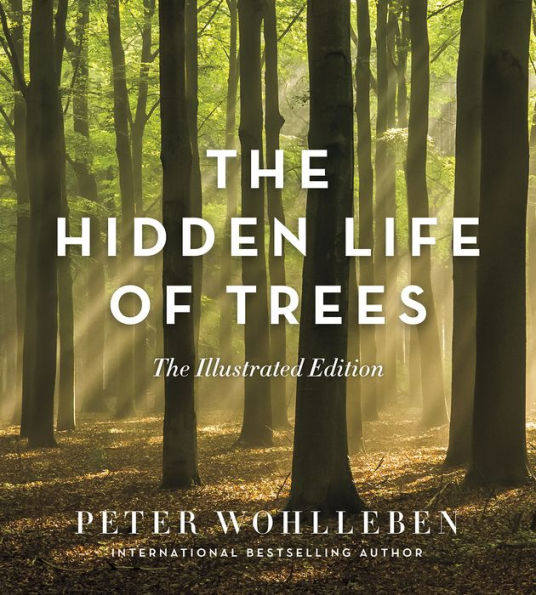

The Hidden Life of Trees: The Illustrated Edition

The Hidden Life of Trees:  The Illustrated Edition, by Peter Wohlleben, Greystone Books Ltd./David Suzuki Institute, 2015/2016/2018. 

   The text in this edition is abridged from the original (and I still need to find and read the original), but the photographs are sublime.  This book is an excellent and easily readable introduction to forest ecology, incorporating many of the recent breakthroughs in our knowledge. (Note:  Peter Wohlleben is an author and has worked for the forestry commission in Germany for over 20 years.  He now manages a forest academy and a natural woodland in Germany.)

What did I gain from reading this book?  Just opening this book and looking at the gorgeous photos relaxes me.  It is absolutely beautiful.  More than simply being a "pretty face", though, this book was a great summary of the workings of forests.
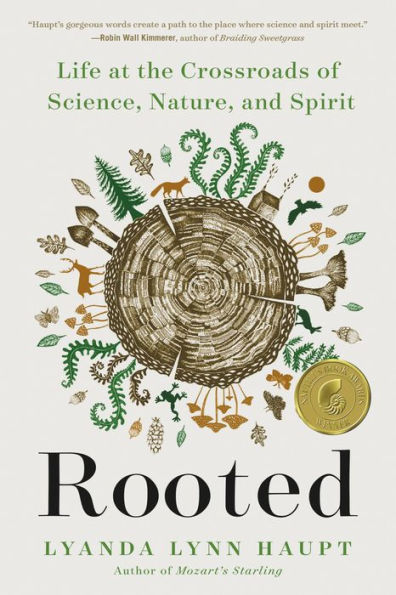

Rooted: Life at the Crossroads of Science, Nature, and Spirit

Rooted: Life at the Crossroads of Science, Nature, and Spirit, by Lyanda Lynn Haupt,  Little, Brown Spark/Hachette Book Group, 2021.

    Rooted is very different from the other books that I have talked about here.  It is based in science, but it is also part philosophy, part spiritual guidance, and part nature guide.  Weaving in quotes from a wide variety of people like Mary Oliver, John O'Donoghue,  Robert Macfarlane, Merlin Sheldrake, and Richard Louv, this book is a rich tapestry from which to draw inspiration and a deep sense of connection with the natural world.

What did I gain from reading this book?  As I read this book, I felt a variety of strands from my life and my reading come together in new ways, highlighting possibilities and encouraging changes in the way I relate to the natural world.  After I finish reading a book, assuming I decide to keep it, I store each one in a  different area, based on how I think I'll access or use it in the future:  plant or animal reference book, general ecological principles, environmental commentary, gardening, poetry, and so forth.  This book is one of the few I keep at my bedside so that I can dip into it for inspiration and rejuvenation when I'm feeling my well run dry.
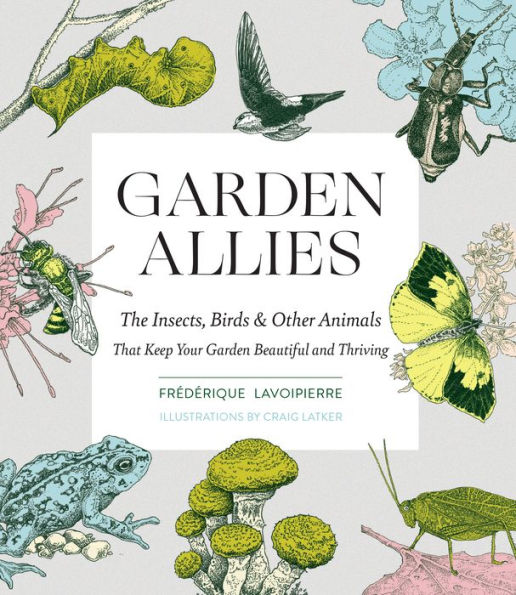
 

Garden Allies: The Insects, Birds, and Other Animals That Keep Your Garden Beautiful and Thriving

Garden Allies: The Insects, Birds & Other Animals That Keep Your Garden Beautiful and Thriving, by Frederique Lavoipierre, Timber Press, Portland, Oregon, 2021.

    A chapter subheading sums up this book well:  "Actors on Your Garden's Stage".  While other books I read in 2023 talked about all the insects and other animals that share life in and on trees, this book does the same for our gardens.  If you read this book, you'll recognize many, many more of the "little  guys" you see in your garden.  (Note:  Frrederique Lavoipierre has a Masters Degree in Biology with an emphasis on ecological principles of sustainable landscaping;  she was written and worked in this field in numerous capacities.)

What did I gain from reading this book?  Garden Allies was a wonderful introduction to a wide variety of the beings that we see in our yards and gardens.  It would be especially useful for someone wanting to learn more about the variety of "bugs" they encounter in their garden.

Silent Earth: Averting the Insect Apocalypse

Silent Earth: Averting the Insect Apocalypse, by Dave Goulson, Harper (HarperCollins), 2021.

    For me, this is simply the best book on what's going on with insect declines.  Not only is there good information on insects themselves, there is excellent background on pesticides and changing farming practices, how artificial fertilizers affect insects, the effects of climate change, and the surprising problem of light pollution.  One of the most memorable sections of this book was Goulson's imaginative trip 50-60 years into the future, pondering what life might be like then if we didn't manage to protect insects now.  The last section of this book is titled "What Can We Do?" and, in it, Goulson outlines specific tasks that we can each do to help protect insect populations.  (Note:  Dave Goulson is Professor of Biology at the University of Sussex in Great Britain.)

What did I gain from reading this book?  Simply put, while Milman's book, The Insect Crisis, was good, this book was excellent at defining the problem of insect decline and also, critically, on giving us concrete suggestions that we each can do to avert the "insect apocalypse".

The New Climate War: The Fight to Take Back Our Planet

The New Climate War: The Fight to Take Back Our Planet, by Michael E. Mann, PublicAffairs (Hachette Book Group), 2021.

    Michael Mann is a climate scientist who has, for decades, been at the forefront of trying to awaken our country to the looming reality of the climate crisis.   This book is about the history of our understanding about global warming and the history of the fight against action to solve this extreme threat to our world.   This is a call to action, and Mann emphasizes that it is NOT too late to act; he helps us see the way forward.  He is adamant that solving the climate crisis will take more than individual action, and he points us in the direction we need to work. (Note:  Michael E. Mann is a Professor of Atmospheric Science at Penn State.)

What did I gain from reading this book?  Having read about Mann's climate work for decades, I found it fascinating to read his story of how climate policies have been submarined by the fossil fuel industry over the years.  The tactics the industry has used have been impressively effective.  Mann himself has been personally vilified in the industry's quest to "Damn the torpedoes and full speed ahead!"  We don't think of scientists as warrior heroes, but Mann has been at the forefront of this battle, fighting for the future for all of us.   
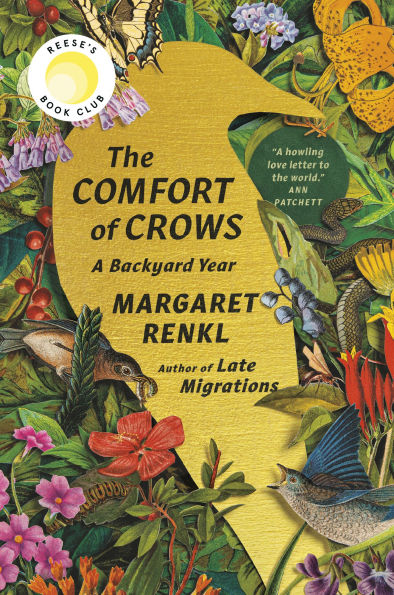

The Comfort of Crows (Reese's Book Club Pick): A Backyard Year

The Comfort of Crows: A Backyard Year, by Margaret Renkl, Spiegel & Grau, New York, 2023.

    Accompanied by a series of delightful artworks depicting nature, this book is a collection of thoughtful and poignant essays on the wildlife all around us in our home landscapes.  Tales of ecstasy and tragedy, musings filled with love and concern, every time I think of reading this book, I reflexively smile.  (Note:  Margaret Renkl is the author of several books and a contributing writer for the New York Times.)

What did I gain from reading this book?  This book gave me beauty and richness and a sense of camaraderie with the author.
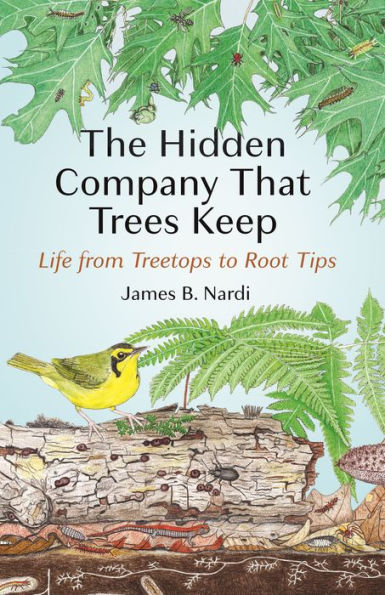
   

The Hidden Company That Trees Keep: Life from Treetops to Root Tips

The Hidden Company That Trees Keep: Life from Treetops to Root Tips, by James B. Nardi, Princeton University Press, 2023.

    When I look at a tree, I look for the animals in and around it, too.  Until I read this book, I usually saw just birds, squirrels, and maybe a few caterpillars.  In this book, Nardi goes much deeper, showing the interconnected webs of hundreds of organisms that are supported by each tree and that support the tree, as well.  He takes each part of the tree and describes the other organisms interacting with that part specifically:  leaves, twigs & buds, the circulatory system, the trunk, the roots, the flowers & fruits.  Who makes galls?  How do trees respond to insect or disease attacks?  What animals help the trees protect themselves?  The richness and diversity Nardi describes are breathtaking. (Note:  James Nardi is a research scientist in biology at the University of Illinois, Urbana-Champaign.)

What did I gain from reading this book?  I love taking walks around our yard and photographing every animal I can find, big or small.  Many of the animals I find are small...and odd looking to my eyes.  This book helped me understand the complex interactions between the animals I observe and the trees in our yard.  I underlined so much as "important - I want to remember this" that there's hardly a page I haven't marked in some way!
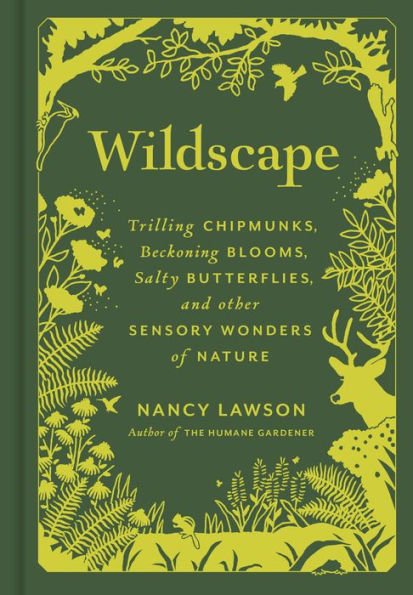
 

Wildscape: Trilling Chipmunks, Beckoning Blooms, Salty Butterflies, and other Sensory Wonders of Nature

Wildscape: Trilling Chipmunds, Beckoning Blooms, Salty Butterflies, and Other Sensory Wonders of Nature, by Nancy Lawson, Princeton Architectural Press, 2023.

    Evocative is the best word I can come up with to describe Nancy Lawson's latest book.  In the grand scheme of things, her Maryland garden doesn't lie all that far from our southeast Virginia one, so she almost feels like a next door neighbor as she talks about the plants and animals in her yard.  And the stories she tells!  Flea beetles helping monarchs in their quest for protective chemicals from milkweeds.  Chipmunks and mice spreading mycorrhizal fungi that connect and nurture plants.  The difference between the songs of "city birds" and "country birds" in the white-throated sparrow population.  The rich discoveries in this book give an increased depth to my experiences in the landscape. (Note: Nancy Lawson is an author, conservationist, and lecturer.)

What did I gain from reading this book?  Nancy Lawson has the gift of loving the unloved - and helping me to love them too.  I see certain plants and animals with new eyes after reading her books or listening to her lectures.  In this book, she took me on a fascinating nature walk, helping me decode some of the behavior or animal traces that I see...or hear...or smell...or touch in the landscape, while helping me appreciate the complexity of plant-animal relationships even more deeply. 


So many books, so little time.....

I hope you're able to find the time to pick up one or more of these books so you can enjoy them too.


Wednesday, January 08, 2025

Books That Enlarged My Outlook in 2024

Thanks to an annual challenge published by the reading challenge group, The 52 Book Club, I have started reading a LOT more in the last several years.  While most of the books I've read have been fiction, I have also read some interesting non-fiction along the way - and, of course, some of my favorite non-fiction books have to do with the environment,  I thought I'd share my favorite environmental reads from 2024.


The Nation of Plants, by Stefano Mancuso, Other Press LLC, New York, 2019/2021.  

    Sometimes I read a book that completely shifts a facet of how I understand the world.  This small book created such a shift in me.  I've always considered animals to be "more advanced" than plants, and thus "more important" somehow.  However, recent research has certainly been expanding our understanding of plants significantly.  Going a step further, this book posits, successfully in my view, that plants are by far the most important living beings on Earth.  "We exist thanks to plants, and we will continue to be able to exist only in their company.  It behooves us to keep this idea clear at all times."  Mancuso starts from that premise and goes on to create a Constitution for The Nation of Plants, imaginatively raising environmental truths to the level of international law.  (Note: Mancuso is a plant neurobiologist at the University of Florence, Italy.)

What did I gain from reading this book?  Reading this book changed my fundamental understanding of the importance of plants compared to animals.


The Insect Crisis, by Oliver Milman, W. W. Norton & Company, 2022.  

    Starting with a brief vision of what would (will?) happen to humans if all insects disappear, Milman goes on to look at the research studies behind recent dire headlines about the significant insect declines being observed.  He shares stories and studies from across the planet.  Then Milman examines the threats that are causing those insect declines, from farming practices to light pollution to global warming, pointing out that many of these threats are voluntary choices we make, so different choices could be made that would be less destructive.  The importance of making those different choices is Milman's ultimate point, a message we should all take to heart.  (Note:  Milman is a British journalist who specializes in the environment.)

What did I gain from reading this book?  In reading this book, I increased my knowledge about the ongoing decline of insects, giving me a deeper commitment to supporting insects and other species in my home's landscape.

    The Silent Earth, by Dave Goulson, was also written about the precipitous decline of insects.  I read this excellent book in 2023 and will discuss it in a post about the books I read that year.


Wilding: Returning Nature to Our Farm, by Isabella Tree, New York Review Books, 2018.

    I've seen this book recommended for years, but it was about an estate in Britain, so I resisted reading it.  What insights could it have that would be of benefit to backyards in the States?  Well, it turns out that this book is chock full of new understandings of ecological processes!  It was amazing.  I'll never look at an ancient tree in the same way again, and I have a much deeper appreciation for the variety of roles that such beings play.  There was information I won't be able to personally use for rewilding (reintroducing large herbivores into the landscape comes to mind) but I found the necessity for their presence and how they impacted the ecosystem to be fascinating.  I highly recommend this book.  (Note:  Isabella Tree is a writer and conservationist who, along with her husband Charlie Burrell, manages the Knepp Estate/Knepp Wildland Project.)

What did I gain from reading this book?  This book probably gave me my single biggest leap forward in understanding ecological processes since Doug Tallamy's Bringing Nature Home.


The Weight of Nature:  How a Changing Climate Changes Our Brains, by Clayton Page Aldern, Dutton (PenguinRandomHouse), 2024.

    We like to think that climate change, a.k.a. global warming, is "out there" and that we can insulate ourselves from it if we're thoughtful and careful...or simply don't give it credence or attention.  Aldern tells us exactly how wrong we are.  He shows us how global warming is changing (all of) our brains, making it harder to think and remember accurately, affecting the decisions we make, making us more prone to violence, giving many of us PTSD, and increasing our exposures to vectors of brain disease.  Climate change is also changing human cultures and language.  (Note:  Aldern is a neuroscientist turned environmental journalist.)

What did I gain from reading this book?  Aldern helped me to understand how ALL of us are already being affected by global warming, mentally and physically.


The Light Eaters:  How the Unseen World of Plant Intelligence Offers a New Understanding of Life on Earth, by Zoe Schlanger, Harper (HarperCollins Publishers), 2024.

    As I mentioned above when talking about The Nation of Plants, botany has been making huge leaps forward in our understanding of plants.  Schlanger's book takes a deeper look at some of these new discoveries and understandings.  Plants can communicate with each other and with some animals - not in the same way we communicate, but in important ways nonetheless.  Plants can feel when things happen to their bodies.  Plants treat their relatives differently than they treat less closely related individuals.  Plants even have memories.  A lot of these discoveries have the potential to significantly change how we relate with plants, which is a sobering thought indeed.  (Note:  Zoe Schlanger is a staff writer at the Atlantic, where she covers climate change.)

What did I gain from reading this book?  From this book, I gained a clearer knowledge of the recent advances in botany that are changing our fundamental understanding of plants.


How to Love a Forest:  The Bittersweet Work of Tending a Changing World, by Ethan Tapper, Broadleaf Books, Minneapolis, 2024.

    Tapper, a forester, bought a "worn out" forest of 175 acres and is working to restore it to ecological health.  In this book, he discusses the sorts of decisions he has to make to help heal his land, some straightforward, but many nuanced and full of compromise.  Because of all the changes that have been made in our landscape over the last 400 years, restoring a forest is no longer as simple as just leaving it alone to restore itself.  Invasive species must be removed, deer populations managed through careful hunting, and other sometimes hard decisions have to be made.  Tapper talks of the necrosphere, the world of dead and dying organisms, and how vital it is to the health of the forest.  His writing is evocative and haunting.

What did I gain from reading this book?  With a wooded yard, I was excited to find this book and read Tapper's advice about forest management, but I came away with many insights into far more than just forestry.


What If We Get It Right?:  Visions of Climate Futures
, by Ayana Elizabeth Johnson, One World (Penguin Random House), 2024.

What would our lives - and our childrens' and our grandchildren's lives - be like in the future if we were able to stop, even repair, global warming?  These days we hear almost no visions of the future that aren't apocalyptic.  Most of these depressing visions are being encouraged by people who want all of us to give up and to accept the status quo so that they can continue to rake in profits.  What If We Get It Right? takes a brief, but thorough, look at where we are and at where we're headed if we make no meaningful change.   Then Johnson talks with 20 people fighting to guide us to a brighter future.  The book ends with a detailed look at a potential future where we're successfully fighting global warming as well as making other changes to provide a cleaner, healthier, more just future.

What did I gain from reading this book?  I gained hope from reading this book.  Hope, and knowledge of the work being done in many different fields to move us forward into a brighter, but not a warmer, future.


There are so many fascinating books being published.  These are the few that I read in 2024.  What books have you been reading, and what have you been learning from them?  I'd love to hear about them in your comments.


Sunday, January 05, 2025

The Restorative Magic of Rewilding

There's not a lot I can do to affect the outcome of global warming or to stop the biodiversity crisis.  That fact tends to keep me awake at night.  However, "not a lot I can do" is not the same as "nothing I can do".  I have found a way to make a difference in both crises, even if it is a small difference, and that way is right outside our home.  Even better, every day I can literally see the difference I'm making.

What's making the difference?  Rewilding.  My husband and I are doing our best to let the land we currently steward heal itself, restore itself.  Over the last 5 years, because of our restorative choices, we have gone from seeing no moths and few butterflies or native bees to seeing all of these and more regularly.

Tiny, but mighty. In this photo, the Thin-lined Calligrapher is feeding at Blue-eyed Grass (Sisyrinchium angustifolium).   The larvae of this species of syrphid fly are fierce predators of aphids, while the adults pollinate flowers as they feed.


What does rewilding our yard entail?  Here are the simple steps that we are taking...or not taking, as the case may be.


1.  Leave the leaves.  Our yard is part of the eastern deciduous forest and it has many large native trees that grew within a forest setting, so they are tall and straight with few low branches.  In the fall, these trees drop LOTS of leaves, which we simply...leave.  Blanketing the ground, the leaves protect the soil from erosion, hold in soil moisture, feed the trees and other plants as they decompose, and provide habitat for an amazing number of animals.  While doing all of that, they also store carbon - and help store more carbon in the soil as they decompose.


As a caterpillar, this beautiful little Red-banded Hairstreak lived in the leaf litter and fed on the fallen leaves of various trees, such as wax myrtle and sumac.  Here it is nectaring at Blue Mistflower (Conoclinium coelestinum), a native perennial.


2.  Minimize lawn.  In our case, there was no functional lawn in the yard when we moved in...so we didn't try to add one.  Ours is a shaded yard, which grass doesn't like, so we're choosing not to fight that battle.  If we had a lawn, we'd be managing it as a "freedom lawn", free from pesticides and fertilizers and welcoming low-growing native plants like violets and nimblewill.


3.  Let native vegetation grow naturally.  As new plants appear in the yard, I do my best to identify them.  If they are native, I generally let them grow with little further fuss..  Some of these plants have actually been growing here for years, suppressed and invisible because of decades of mowing.  Other native species have come up from the seedbank in the soil.  Many natives have come from seeds deposited by birds and other animals as they move through our landscape.  Plants like mayapple, frost aster, American pokeweed, rough-leaved goldenrod, nimblewill, and numerous tree and shrub seedlings have appeared "on their own" in one of these ways.


The Late Boneset (Eupatorium serotinum) in this photo is an example of a native that seeded itself into our yard.  I found I loved it almost as much as this Eastern Tiger Swallowtail does, so I transplanted a second one from our daughter's yard and bought 3 more to add to the area.


4.  Remove invasive plants.  Perhaps surprisingly, this is an extremely valuable step.  The importance of native plants is that they have co-evolved with and are eaten by native insects and other native animals, so they support animal life.  Invasive plants, which are aggressive non-natives, don't get eaten and therefore have no limits on their growth and reproduction.  Invasives can take over entire landscapes, smothering the native plants in the process.  Think kudzu, the vine that ate the South.  It's like having plastic plants as far as supporting birds and other wildlife are concerned.


The lush green grass that's carpeting this woodland floor is actually invasive Japanese Stilt Grass.  An annual that seeds heavily, stilt grass rapidly takes over and suppresses almost all other vegetation.  Nothing eats it, so the forest floor essentially becomes a green desert where it grows.  We had a fair amount of stilt grass, which I have worked hard to suppress by hand pulling.  There will always be some, but right now it's easy to keep under control as I work on other things around the yard.


5.  Avoid using pesticides (including insecticides and rodenticides), fungicides, herbicides, and artificial fertilizers.  ("-cide"means "to kill").  Your rewilding landscape will re-establish its own balances and counterbalances, remaining much healthier than it ever could be by using toxins and artificial chemicals within it.  The only exception to this rule is the judicious use of specific herbicides, if necessary, to help remove particularly problematic invasive plant species.


Doing its best to imitate a half-eaten stem, this inchworm is one of many caterpillars that now call our yard home...that is, they call it home until they get eaten or until they pupate and change into moths or butterflies.   Inchworms are the larvae of geometrid moths;  this one is feeding on Rough-leaved Goldenrod.  Dr. Doug Tallamy reports that 95% of all woodland birds raise their young on insects, especially caterpillars.  If you want birds, you have to have caterpillars.   If you want caterpillars, you can't use insecticides.


This is what happens when you "sit on your hands" and don't use insecticides.  See that little orange "bug"?  That's an oleander aphid on swamp milkweed...being eaten by the larva of a lacewing!  There was a pretty good crowd of oleander aphids for a little while, but the lacewings and syrphid flies moved in and feasted.  Within a couple days, the oleander aphids were gone.  If you want lacewings and syrphid flies to do your pest control, you can't use insecticides...or even squash or wash off the aphids.


6.  Plant native plants that fit our specific ecosystem community.  In our eastern deciduous woodland yard, for example, we have added blueberries, beauty berries, Christmas ferns, bloodroot, mayapple, and pawpaw, among others.

Here a Variegated Fritillary is laying an egg on a decrepit looking Common Violet (8/3/24).


7.  Observe what's going on!  It's so common for gardeners to be "all work & no play" in their gardens, but I consciously and regularly take time to walk around, just to look and learn - and to take photos.  This is how I find new species appearing and it's an important way I figure out how different plants and animals are interacting.

A case in point.....


There haven't been many, but each summer or fall I usually find a monarch caterpillar or two on the Swamp Milkweed (Asclepius tuberosa) that I have planted around the yard.  I found this one and a sibling in early September.  True to form, after a few days the caterpillars disappeared.  I always hope they've pupated and flown off successfully, but it's rare for me to know with any certainty.


In this case, I was luckier than usual.  At the end of October, I noticed this little bit of "debris" in amongst the seed heads of this Late Boneset (Eupatorium serotinum), located about 15' away from the swamp milkweed where I'd observed the monarch caterpillars 7 weeks earlier.  If you look closely, you'll see that this is an empty pupa, with the monarch having successfully hatched.   Presumably, by the time I found this bit of evidence, the monarch was well on its way to Mexico.


8.  Learn.  Then learn some more.  There are so many fantastic resources these days, from books to YouTube videos, from our local native plant societies to online seminars, from native plant nurseries to websites, from podcasts to Facebook groups.  Fellow wildlife gardeners and rewilders can be especially fun to learn with and from.


After years of seeing this book, I finally read it this summer - and it was amazing.  It's about an English estate whose owners were losing money in traditional agriculture, so they decided to "wild" it.  Even though the species discussed are British, the concepts are universal and I learned an incredible amount from reading it.  I'll never look at an ancient, half dead tree the same way again.


9.  Put up signage in your yard to showcase what you are working to accomplish.


We put up this "real estate" box near the road to share updates about why and how we are rewilding our yard.  I try to put out new updates several times a year.

10.  Share news of your discoveries and successes with others, through photos and Facebook posts and conversations.  Who knows?  You may even want to start your own blog!


August, 2023, was the first time we saw this beautiful species in our yard.  It's called a Common Buckeye and the caterpillars feed on Wild Petunia (Ruellia sp.) and Plantain (Plantago sp.), among a few other species, both of which we now have in our yard.   Here the adult is nectaring at Hairy Elephant's Foot (Elephantopus tomentosus).


Are my husband and I making a difference?  Yes, I know we are.  

From rarely seeing any insects when we first moved in (fall 2019), to documenting over 550 species of animals in the yard during the last 2 years, it's obvious that our yard is now supporting much more biodiversity.  The majority of those newly documented species are the all important insects.  Does that mean we are overrun with "bugs"?  Not at all!  I actually have to look hard to see many of the insects living here. A huge proportion of insects, it turns out, are predators on other insects, working to keep our little ecosystem balanced and functioning smoothly.

Not only are we making a visible difference through our choices, this is frankly fun.  We see small iridescent green bees and big yellow striped swallowtails, robber flies and lacewings, tree frogs and skinks.  A wide variety of birds hang out in our yard, providing a background chorus for much of the year.  Our grandsons are becoming excellent birders and sharp observers of the natural world.

We can't save the entire world by ourselves, but we can do our best to save our little corner of it.  The more of us working together on wildlife gardening, even rewilding, the larger our impact will be.

Sunday, August 04, 2024

An Eventful Week in the Abbott Annex of Homegrown National Park

 What a week it's been!


Last Wednesday, an immature Cooper's Hawk (Accipiter cooperii) caught, killed, and ate a Mourning Dove (Zenaida macroura) right outside my office window.  Yes, I felt bad for the dove...but the hawk has to eat, too.  It seemed really hungry and stayed in that same spot, eating nonstop, for over 90 minutes.

A new species of firefly has started flashing in the yard lately, during the time immediately after dark.  Unfortunately, I don't have any photos to share.  We noticed them Friday night, when our cable went out due to a storm.  With no internet to distract us, we sat on the front porch watching the storm - and serendipitously noticed the fireflies.  This species seems to flash in a fairly long, horizontal single flash - no "J dip".  I haven't been able to find an adult during the day yet; I'm hoping to so that I can try to identify which species this is.

This evening I thought I might re-enact my childhood and catch a couple in a jar, look at them up close, and then release them...but either fireflies have gotten a lot more elusive or I've gotten a lot worse at catching them.  It didn't help that it was lightly raining, thunder was grumbling, and there were occasional flashes of lightning in the sky.  My heart just wasn't in the project.  I kept seeing headlines that read, "68 Year Old Woman Struck By Lightning As She Tried To Catch Fireflies In A Jar".  I guess it would make a good family history story, though.

A new-to-the-yard firefly species would bring our yard total up to 4 different species of fireflies.


The eggs of the Eastern Bluebirds (Sialia sialis) have hatched.  Not only are Mom and Dad Bluebird busy getting food for the chicks, but there's a juvenile hanging around that I think may be from an earlier clutch.


Right outside the bluebird box, the berries on our large American Pokeweed (Phytolacca americana) have started to change color, and the birds are eating them as fast as they ripen.  Note the bright pink remnants of a berry cluster?  THAT bunch didn't last long!  

Cardinals (Cardinalis cardinalis) seem to be very common consumers, as do the Bluebirds themselves.  Blue Jays (Cyanocitta cristata) tried to come in to snack on the berries, too, but the Bluebirds were having none of that, thank you very kindly.  They were  extremely vigorous in driving the jays away.  The Bluebirds didn't seem to mind the Cardinals, though.  I saw one juvenile Eastern Towhee (Pipilo erythrophthalmus) hop into the bush, but a human visitor scared him away before I could see if he was just passing through or if he was actually there to eat.  And, if the latter, whether he would upset the Bluebirds.


Yesterday, I was lucky enough to see a Variegated Fritillary (Euptoieta claudia) bopping all around the back yard, laying eggs on a large number of Violets (Viola sororia).  I've understood for years that violets are the host plants for fritillaries, but I've never seen any sign of caterpillars on any violets that I've grown.  I'm looking forward to being a fritillary grandparent now!


The Variegated Fritillary took a few moments to relax from her labors and I was able to snap a photo - not a good one, but still enough to let you know what she looks like in general.  She was about the size of a Painted Lady or Red Admiral.

Note:  Apparently this species of fritillary differs from many of the other fritillary species in having additional host plants besides violets.  According to iNaturalist, in our yard the other host plants would be Plantain (Plantago sp.), Mayapple (Podophyllum peltatum), and possibly Yellow Passionvine (Passiflora lutea), since 3 other Passiflora species are listed as host plants.


Shortly after I lost sight of the Variegated Fritillary, a Spicebush Swallowtail (Papilio troilus) zipped in and seemed to lay eggs on the Spicebush (Lindera benzoin) by the back shed.  I was able to capture a photo of the butterfly, but I didn't catch her "in the act".  Now I know, though, that I'm likely to see the folded leaves that signal Spicebush Swallowtail caterpillars in the near future.  

As I meander in the yard this summer, I feel like I'm seeing an exciting increase in insect species, especially in butterflies and moths.  So far this year I've seen Spicebush Swallowtails (Papilio troilus), a Pipeline Swallowtail (Battus philenor), Tulip-tree Beauties (Epimecis hortaria), 2 species of Underwing Moths, Baltimore Snouts (Hypena baltimoralis), and over 15 other moth species that are "new to the yard".  Those are just the ones I've been able to take photos of that were clear enough to identify.  There have been many, many more moths and butterflies than fluttered away without posing for me.  And I'm only seeing the adults, the ones that weren't turned into baby birds or other animals when they were caterpillars!

I recently finished reading Oliver Milman's The Insect Crisis: The Fall of the Tiny Empires That Run the World, published in 2022.  It was a sobering read and reinforced my passion for rewilding our little space, working to create a bit of habitat where native plants and insects have a chance to live and flourish.

We started caring for this yard in the fall of 2019.  Over the course of that first year, I saw just a couple butterfly and skipper species - and no moths, despite being outside pulling Japanese Stiltgrass for what felt like days on end.  

The difference between then and now is so incredibly heartening.  It gives me hope.  We've removed invasive species, left the leaves, left native seedlings that were "planted" by birds, and we've also planted more native plants.  We haven't sprayed insecticides or herbicides.  That's it.  Nothing fancy or complicated.  That's been our management plan as we try to give nature some breathing space to recover.  And our yard has responded: it is infinitely more full of life now than it was 4 years ago.  We CAN have a positive impact.


Wednesday, January 26, 2022

Kids in Nature


Richard Louv's important book, Last Child in the Woods, was written in 2008 and brought attention to the reality that few children actually get to spend much time playing freely outdoors.   It sparked a subset of parents and other adults who have been trying to encourage families to get their kids outdoors in nature.  Unfortunately, it's seemed (from the outside, at least) like a bit of a slog, fighting through the mud that is the way our society is currently set up - barren yards full of chemicalized lawn and non-native plants, schedules jammed with activities that require all of our highly scheduled time and attention, parks given over to sports' fields rather than natural areas, and a general distrust of free time as "unproductive", the ultimate sin in the U.S.

When I was in elementary school, I spent days...weeks... months exploring the woods and creek near our home in College Park, Maryland.  There were tadpoles and crayfish to try to catch, minnows and frogs to watch, and many, many special places where my imagination could run wild.  The holly glade magically hid me, the tiny islands became my kingdoms, the paths (deer?) became trails leading me to new lands.....  When we moved to Massachusetts, I continued playing in the woods but I was getting a bit older.  Now I had a favorite log on a hillside overlooking a pond where my best friend and I would go after school to talk and just generally try to figure out life.  I led a band of neighborhood kids in catching toads and keeping them, naming them and "training" them to race in sandbox toad races such as high jump, long jump, and speed or distance trials.  (What can I say?  I knew I'd never have a horse;  maybe this was scratching that itch!)

In junior high, in the Panama Canal Zone, I tried my hand at gardening (I was awful at it) and explored the sea shore as much as I could, bringing home hermit crabs and other sea creatures to form my own attempt at a personal zoo.  Sadly, coming home with me was generally a death sentence for the poor animals, but I tried my best to provide good habitat and food for them.  Gerald Durrell's My Family and Other Animals, which my maternal uncle had introduced to me, was one of my favorite books - and a real inspiration.  More mundanely, I collected shells, too.  A lot of shells, which I carefully worked to identify and which I housed in cigar boxes, grouped by "type": moon shells, pen shells, scallops, whelks, cowries, etc.  I wanted so badly to be a marine biologist...but our next move was to Kansas and I didn't know any marine biologists.  How did you actually make a living as a marine biologist?  My courage and my imagination failed me in figuring out how to step in that direction, and life soon led me in other directions.

All of this is to say that playing outside, freely and with little oversight, was incredibly important to me and was influential in forming the person I became.  Greg and I were able to give our kids a taste of that freedom in the natural world, too, when they were in late elementary and middle school.

And now we're trying to give the gift of free play in nature to our grandsons as well.

It's a goal that seems to get harder with each generation.  If my parents worried about where I was while I was gone for most of each day, playing in the woods, I was unaware of it, and the wild area was right down the street from where we lived.  I walked there.  When our kids were playing outdoors, we lived in farm country and they were able to ramble through a wooded draw behind our house and through a neighbor's cow pasture.

Where do kids play now?  There are few natural areas left where they can roam and wander at will.  There's so much fear about "danger" that parents actually get prosecuted for letting their children roam freely.  (Or, at least, that's the story we're told.)


So I'm working to make our personal landscape an interesting natural area for our grandsons to explore and play in.  I've come across a wonderful book by Nancy Striniste, Nature Play at Home, which has a plethora of great ideas for changing your yard from bland to fascinating.   I highly recommend it if the topic interests you at all.


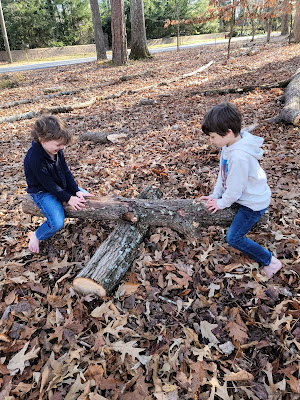
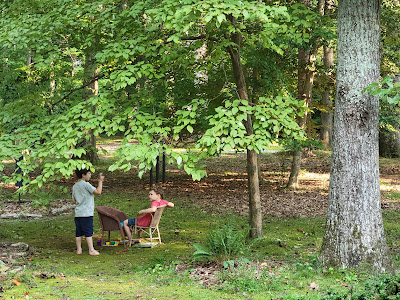
When dead wood was trimmed out of our trees last month, I had the tree service leave the major branches and trunks.  One of the things I've done with that dead wood is create play areas for the boys in our yard.


Good habitat for people AND animals.


Even their dad has gotten in on the action!


Bare feet are the norm for the boys, not the exception.  In fact, it's hard now to get them to wear shoes, even in cold weather.  Talk about "grounding"!


And imaginations run wild.


My heart truly swelled with happiness and pride the day that the boys came outside, on their own, with notebooks, guidebooks, binoculars, and pencils to "study nature".


They are not always successful in their endeavors - patience was not their strong suit as Connor tried to entice birds to eat out of his hand.  But that's part of the learning.


Even meal times have an element of outside nature for all of us, as we watch our bird feeders from the table on the back porch.  The boys have become excellent birders.  For example, it was our older grandson who first noticed the immature male Baltimore oriole feeding on the bark butter feeder a few weeks ago.  I'm not sure I wouldn't have quickly glanced at the bird and dismissed it as the pine warbler that had been frequently visiting.  I never expected a Baltimore oriole in January!

In other interactions with animals, we and the boys watch fireflies at night in the summer - last summer we noticed 3 different waves of them: one in April, one in mid summer, and one in early fall.  The April fireflies seem to stay 30' or more above the ground.  I've even found the firefly larvae occasionally as I weed.  

We planted around 30 swamp milkweed last spring and we watched for monarch caterpillars all summer long;  we did find a few and we're hoping for more next summer.  Our plants are still young.  We've found large numbers of black swallowtail caterpillars on parsley, enough that we've had to hit the grocery store for organic parsley when the hungry hordes decimated the plants they were on.

Late this summer, a box turtle wandered through the front yard - the first one I've seen in our yard in 2 years.  We see skinks and a few baby toads.  The boys haven't shown any interest in toad races yet, though! 

I hope we're building happy memories for them, strongly grounded in the natural world, that will last the boys for a lifetime.  Most importantly, I hope we're helping to create a new generation that cares enough about the Earth to help care for it in the future.

Sunday, October 28, 2018

Book Time: CLIMATE-WISE LANDSCAPING

After reading this review, you can heave a big sigh of relief -I will have caught up with all my gardening related book reviews!

Having just finished Climate-Wise Landscaping, I feel very au courant in writing this review!

I'm not sure what I was expecting, but somehow this book seemed different from what the title suggested it was going to be - different in a good way, more important, filling a gap that's been existing in gardening literature.

Climate-Wise Landscaping:  Practical Actions for a Sustainable Future, by Sue Reed and Ginny Stibolt, New Society Publishers, British Columbia, Canada, 2018, is a perfect guide for people who are worried about our planet's future and are looking for something that they, personally, can do to help lessen climate change and to make our ecosystems healthier.

Every single piece of land can help heal our planet.

There are ten sections in this book, each section dealing with an area of the landscape around a typical home, wherever it is located, starting with the lawn.  Why do Reed and Stibolt begin with the lawn?  As they put it, "...[C]hanging the way we think about and deal with our lawns might be the easiest and most significant step we can take to help the planet."  How much lawn do you think there is in the continental U.S.?  According to the International Society for Photogrammetry and Remote Sensing, as quoted in this book, there is about 63,000 square miles of lawn, an area approximately the size of the state of West Virginia.  That's a lot of lawn - and most of it gets mowed weekly, inundated with fertilizers and pesticides, and irrigated.  Despite all those inputs, lawn produces no food, for people or even for wildlife.  It's essentially a sterile wasteland.

Reed and Stibolt go on to cover many other ways we can help the climate by changing the way we use our landscape.  For example, planting trees sequesters a lot of carbon, as does, surprisingly to me, increasing the health of soils and decreasing the disturbance to them.  Did you know that soils sequester more than 4 times the amount of carbon as forests?  I didn't.  Apparently they are the second largest carbon dioxide absorbing system on our planet, after oceans.  I also didn't know that every time you disturb the soil - through digging, for example - you release carbon dioxide.  So switching from planting annuals, which have to be replanted regularly, to planting perennials actually helps the planet by sequestering carbon!

I'm all for minimizing digging, so that's what I call a win-win.

There's a section on how good planning and design of a landscape can help decrease energy use (and thus carbon dioxide emissions), as well as a section specifically devoted to urban issues.  Each section contains an introductory explanation, followed by a series of "Action Topics", specific ways you can make your landscape work to help stabilize Earth's climate and often to help yourself and other living things at the same time.

Last, but hardly least, the final section covers materials that are commonly used in landscaping and evaluates their carbon footprint, helping us choose rationally among such options as concrete, brick, stone, even asphalt.  This is the first time I've ever seen a carbon analysis of landscaping materials and I really appreciate finding it included in this book.

This is an excellent resource to start with if you're interested in personally doing something specific to help the future of our species and of our planet.  It's a broad overview of the topics covered;  for specific details, you will probably want to explore the areas that interest you further, with further reading or study.  Most of all, Climate-Wise Landscaping examines a broad array of possibilities - and possibilities are a great starting point for building a better future. 

Friday, October 26, 2018

Book Time: THE INWARD GARDEN

I don't know about you, but I have a perplexing habit of buying books and then getting distracted before I actually read them.  Thus my shelves are full of books that look awesome, but that I haven't read yet.

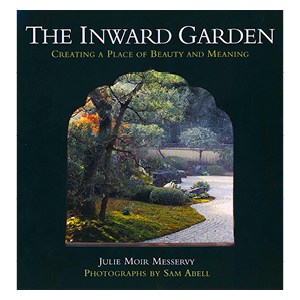
The Inward Garden:Creating a Place of Beauty and Meaning, by Julie Moir Messervy, Little, Brown and Company, 1995, is a book that has been a victim of my book hoarding habit, but this spring I finally read it - cover to cover - and  I fell in love.  I truly don't remember when I found and bought this book.  I'm hoping it wasn't shortly after it was published, in 1995, because that would mean that I've been unnecessarily missing the wisdom found within its pages for over 20 years.

Unlike the last 3 books I've reviewed, which have focused on native plants and gardening for wildlife, this book is more of a classic garden design book.  And yet it's so much more than just that.....

The Inward Garden encourages us to make gardens more than just pretty places.  In the beginning of this book, Moir Messervy describes a garden in this way, "...[A] garden means far more than just a planted place.  It is a touchstone;  a repository of memories that forms a place of joy in your life.  A garden exists not only as part of your backyard landscape, but as a site that resides in your imagination, a collection of personally satisfying images that can be expressed upon your land."

Do you remember your favorite outdoor places to be as a child?   Are you drawn to enclosures or promontories?  What's your personal image of paradise?  Moir Messervy guides us through these sorts of questions, showing us how our gardens can reflect our own personal histories and memories, our own personal inspirations.  First, though, we have to THINK about these sorts of questions - and then we have to take the answers we've come up with and help them take shape within the parameters of our actual physical space.

There are so many components we can draw upon to create our own touchstone gardens:  color, form, sound, light, plants, geometric vs. natural order, uniformity vs. variety.  It's hard to keep track of all of the different possibilities, but Moir Messervy helps us think about each one in turn without dictating what is "right" or "better".

To a great extent, this book is a combination of psychological concepts and gardening, examining such classic themes as the sacred forest, a classic hut, the need for enclosure, thresholds, bridges, and gateways.   Moir Messervy talks about journeys through our gardens, both mental and physical, with starting points, pathways, and destinations.  

 "...[P]eople garden in order to make something grow; to interact with nature; to share, to find sanctuary, to heal, to honor the earth, to leave a mark.  Through gardening, we feel whole as we make our personal work of art upon our land."

The Inward Garden is a book to aid us in making our gardens into true personal works of art upon our own land.  With ideas and passions to inspire us, this is a book that gives us a serious look at the kinds of gardens we can to aspire to create.  The richness in this book is many layered and it invites us to return for refreshment and new inspiration again and again and again.  I highly recommend finding a copy of this classic work and immersing yourself within it.  You'll be so glad that you did.

Tuesday, October 23, 2018

Book Time: A NEW GARDEN ETHIC

Quite a few years ago now, I started "talking" with my books by underlining passages that spoke to me and by writing comments in the margins.  It was hard to do at first, but once I got over my good-girl habits of keeping my books pristine, I found that it really helps when I go back to a book to review and refresh myself about what it said.  Most importantly, doing this provides a conversation to join when I reread the book.  I can see what captured my attention originally and compare those ideas to what strikes me now, making my understanding of the book deeper with each reading.  Occasionally I've even shared a book with a friend and invited her to comment (in a different color ink), which adds yet another level of interaction with the written words.

Because of this habit I have of physically talking with my books in written form, one of my easiest "sorts" for which books I want to keep and which ones just need to be passed along is a simple look to see whether or not I've underlined and commented in the book in question.  If it wasn't interesting enough to mark up, it's not interesting enough to keep.  Maybe someone else needs that book more than I do.

A New Garden Ethic, by Benjamin Vogt, New Society Publishers, BC Canada, 2017, passed my "Do I keep this?" sorting question with flying colors.  It's marked up all over the place.  It's marked up so much that my big question for this post is, "How can I possibly do this book justice in a simple, short review of it?"

As I sat down this afternoon to start thinking about writing this review, I began to thumb through the pages.  An entire paragraph highlighted here.  Exclamation point there.  "Great series of questions...." on one page.  Lots of "Wow!" and "Yes!" comments in the margin.  Ideas for blog posts.  Books to read.  More underlining.  Asterisks.  Occasional notes asking about sources for certain claims.  There is so much to digest here that I've become convinced A New Garden Ethic would make a wonderful book for a gardening book club to read and discuss - probably over a long weekend, as a single hour or two wouldn't be nearly long enough.

One interesting twist to this ecological gardening book is its author, Benjamin Vogt.  Dr. Vogt has a PhD, but it's in creative writing, not in biology or ecology or horticulture or landscape architecture or any of the myriad fields that one would normally associate with a book of this nature.  That said, prairie and ecological garden design are obviously deep passions for Vogt and he's educated himself accordingly.  Coming from a creative background, his writing has a vibrancy that can sometimes be lacking in more scientific tomes.

I'll be up front, though:  to me, Vogt's lack of scientific training shows up rather glaringly here as a lack of citations for some of his specific facts.  It is not enough to say Scientist Y did a study in which she found xyz.  I want to know where to find that study - what journal was it published in?  when and where was the study performed?  what were the parameters?  I want to be able to delve into some of those studies more closely to see if the findings are being accurately reported in what was written.  I may want to use those statistics in something I write, too, but I'm not going to quote statistics without knowing where they come from, even in a simple blog post.  A revised edition with this major flaw remedied would strengthen this book significantly, in my opinion.

Beyond that flaw, though, there's an incredible amount of substance in this book that captures my spirit and that doesn't rely on specific studies or individual facts.  Take this wonderful passage that I've seen others pull from the book as a quote, "We live in a world of perfectly spaced plants that mimic headstones aligned in exact intervals.  Wood mulch is more important to us than flowers.  We clean up our gardens like they are living rooms after the children have gone to bed."  With 3 lines, Vogt has given us several iconic images that capture the lack of real life in so many modern gardens.

In the first chapter of this book, Vogt gives us a basic framework about what he sees as being right and wrong about most gardens, yards, and natural areas in our current day and age.  This framework leads him to a statement of a new garden ethic that he believes we need to live by if we want to have our gardens function as more than just a pretty fashion accessory...and Vogt is compelling as he shows us why we want our gardens to function so richly.

With native plants being integral to ecological function in any landscape, Chapter 2 is generally a discussion of native plants, their importance, and the pushback against their use in many circles.  There's a small, fascinating section on the politics and culture of using native plants:  is it "fair" or "democratic" to say that gardeners should only use native plants?  "When we step in and impose our ideals of democracy on a landscape, we disrupt and destroy the landscape, altering life processes that have worked long before we created human democracy...."  Vogt notes that plant culture should not be mistaken for human culture, that nature and ecosystem function have little to do with patriotism or freedom or other political concepts.

In the remaining 3 chapters of the book, Vogt discusses a wide variety of topics ranging from cognitive dissonance and the value of anger and hopelessness to the impact of the Enlightenment on where we are today, all with the object of moving us towards developing and being willing to utilize the defiant compassion that he believes we need to bring to our relationship with our landscapes and gardens.

A New Garden Ethic is a call to action, a call to enrich our own lives and the world immediately around us by connecting deeply to our specific physical environs.  By answering this call, Vogt believes we can each help to save the planet's living fabric, one garden at a time.

Monday, October 22, 2018

Book Time: THE HUMANE GARDENER

After running across and deeply enjoying Nancy Lawson's blog, Humane Gardener, I was excited when I realized she was writing a book by the same name.  The subtitle of her blog is perfect, "Cultivating Compassion for All Creatures Great and Small".  Lawson worked for many years as an editor for the Humane Society of the United States - and I think that caring and compassion for ALL animals has seeped into her psyche, based on the writing she shares both on her blog and in her book.

The Humane Gardener:  Nurturing a Backyard Habitat for Wildlife, by Nancy Lawson, Princeton Architectural Press, New York, New York, 2017 is a relatively small book, almost a series of 6 essays rather than a scientific tome or an intense guide of gardening methodologies.  Each essay, or chapter, is accompanied by a "portrait" of a real garden and its real gardener, exemplifying the characteristics talked about in the companion chapter.  The gardens range from California to Florida, from Ontario to Oregon, with Colorado and the Chicago area filling in the area in the middle.

More than most gardening books, The Humane Gardener focuses on the animals that are so often collateral damage in modern gardening methods:  from the wide variety of small animals that get chopped up, along with the grass, by lawnmowers to the tiny denizens of leaf litter when it's allowed to lie undisturbed under shrubs and perennials.  There are a few statistics ("The nestlings of 96 percent of North American terrestrial bird species survive on spiders and insects, mostly caterpillars, who are themselves babies with specialized habitat needs....") but most of the information and advice is given in anecdotal form, which makes it easy to digest.

In the book's introduction, Lawson remarks that the gardeners she chose to highlight "embody the ethic of compassionate landscaping, challenging long-held assumptions about animals, plants, and themselves."   Compassionate landscaping.  Compassionate landscaping.  I love that term and the ethic it defines.  The Humane Gardener is a great introduction to this ethical concept.

This ethical concept does not, however, meld well with the perfection-driven standards promoted in most regular garden literature, and Lawson talks about her journey from a mainstream gardener to a compassionate gardener, from being willingly sucked into the "marketing ploys of the Landscaping Industrial Complex" to learning from the plants and animals sharing her yard with her.  In her garden portraits, she often talks about the journeys these other gardeners have made, too. 

As a map of a changing journey in gardening, this book is written as a general guide of concepts which can be used across the entire country.  Thus there is little talk of specifics:  don't look to this book for which particular species to use where or what the best method of performing a particular task is.  The overarching ideas Lawson shares are widely adaptable and easily understandable, though.

The last section of The Humane Gardener is a series of resources you can turn to if you want to get started practicing compassionate landscaping yourself:  among them are a couple addresses for excellent blogs, a short list of regional references for wildlife habitat gardening, notes on the individual chapters, and a selected bibliography.

I greatly enjoyed The Humane Gardener and I would highly recommend it to anyone intrigued by the idea of using compassionate landscaping in their own home environs.

Book Time: GARDEN REVOLUTION

As I started thinking about getting ready for holiday guests and Thanksgiving feasts, I realized that I had a pile of books on our dining room table that were there to remind me to write about them.  It's a pile that's been slowly but steadily growing for quite some time now - and I was somewhere between shocked and dismayed to realize that, in that pile, I had amassed 6 books with gardening as their theme.

So I've pulled them out and arranged them in the order that I read them, in the process realizing that one book had been added to the pile without my actually having read it.  Oops.  Wrong pile.  (Yes, sadly, I have many piles of books around the house.)  So let me get busy with the first of the remaining 5 books in my dining room table pile.

Without further ado, here are my thoughts on Garden Revolution, by Larry Weaner and Thomas Christopher, Timber Press, 2016, which I read about a year ago, in November 2017.....

Subtitled "How our landscapes can be a source of environmental change",  Garden Revolution truly amazed me.  I've been interested in gardening for and with wildlife for decades now and I have read a lot on the subject.  I am deeply interested in the environment and in ecology.  Not surprisingly, I've done a lot of hands-on gardening and landscaping for wildlife over the years.  Native plants are my "go to" species in planting my yard and its individual gardens.  Truthfully, it's rare for me to find a book with a really new spin or a new series of concepts on any of these subjects - but that's exactly the sort of book I found as I delved into Garden Revolution.

Larry Weaner is a landscape designer who specializes in ecological restoration AND fine garden design.  One of his early insights as he worked in garden design was "...a traditional garden is like a beautiful car with no engine.  The body is sleek, the interior is plush, and the stereo sounds great, but the owner will always need to push it up the hills with bags of fertilizer, weeding forks, and watering wands."  Weaner works WITH nature, in truly amazing ways, to develop beautiful, continually changing, living landscapes.

Working with nature....  What, exactly, do I mean by that?  Before, I've always just meant avoiding pesticides and using native plants, while trying to match the plant species to its preferred growing conditions and hopefully creating habitat for wildlife.  Weaner takes it so much further.  He pays attention to the seeds found in the "seed bank" that is present in every soil, adds in seeds for species that will help succession move in preferred directions, plants small clumps of wildflowers as seed sources to allow for natural spread, and has many other techniques to nudge natural processes in ways helpful to gardeners and landscapers.

Presented in large format with lots of photos, Garden Revolution at first gives off a vibe almost like a "coffeetable book", but it's much more than that.  There is background information, both historical and biological, presented conversationally so that it doesn't overwhelm.  From Weaner's decades of work, there are examples of gardens from large estates to small suburban gardens, discussed in the text as well as illustrated by gorgeous photography.

Using aggressive native species to outcompete problematic invasive species.  Planning and planting for seasonal and successional niches instead of just planting a "once in time" landscape plan.  Cutting weeds off just below the surface instead of pulling them out by the roots and disturbing the soil.  The new ways of thinking about garden design, preparation, planting, and maintenance just keep coming in this book.

Want to help nature and our planet's ecosystems in a very basic, personal, and satisfying way?  Want to help yourself have a thriving landscape with less work?   Want to attract wildlife to your surroundings?  Read this book.  You'll be glad you did.

Thursday, June 07, 2018

The Icon Tree

Have you ever read Stanley Kunitz's The Wild Braid?  If you haven't, you should.  It's a marvelous meditation on the intersection between gardening and poetry, one of those books I like to pull out and dip into every so often.  Each time I reread it, I find something new that stands out.

Several months ago, looking (I think) for references to winter solstice, I pulled The Wild Braid back off my shelf and revisited it.  While I didn't find anything that spoke to me about winter solstice, I did find a passage about an old tree in his Provincetown garden that resonated, so I marked the passage to blog about.  As I've thought back to that passage over the intervening time, I've remembered his old tree as an aging eyesore that became an "icon tree" in his garden.

Speaking of aging eyesores, smack dab in the center of our view of the lake, there's a dying laurel oak down by our dock. 

As I went about daily life this winter and spring, occasionally I'd think about the blog post waiting to be written.  Somehow our gaunt and decrepit laurel oak merged in my mind with that dying cherry, tended by Kunitz in his long ago Provincetown garden.  I came to think of this laurel oak as our garden's "icon tree".

Well, 6 months later I'm finally getting around to writing that blog post.  I pulled The Wild Braid out of the stack of books by the recliner to refresh my memory by rereading the passage before beginning.  Scanning the passages I'd marked, I could find no reference to an "icon tree".

Puzzled, I went back and looked harder.  I'd marked a section about a tree that Kunitz called the lamentation tree (p. 58-61).  Could that be the tree I was remembering as the "icon tree"?  As I reread the section closely, I decided that it was.  Funny how our minds play tricks on us!

"When we first moved in, there was a wild cherry tree, rather nondescript, growing there in a bed of ivy by the cellar door in front of the house.  It was the only tree in the garden areas, and, like most wild cherry trees, it was infested with gypsy moths and all sorts of destructive creatures.   ...[T]he tree showed no signs of recovering....  ...[T]he roots were being devoured by root borers...and meanwhile the wild ivy kept growing.  ...[S]oon the ivy covered the whole tree and began dangling from it.  In time the tree assumed the character of a woman locked in mourning."

Kunitz goes on to recall Martha Graham and a famous dance she performed called "Lamentation," where the postures of the body contracted and bent to visually personify grief.  "Gradually my ivy-burdened cherry tree seemed to take on the exact same posture.  It was so bent over with the weight of its grief that it no longer reached toward the sky but toward the earth, and so I named it "The Lamentation Tree."

After several years, the tree eventually succumbed to the weight of the ivy combined with the force of storm winds.  Kunitz wrote, "The lamentation tree was the most conspicuous eccentricity in the garden during those early years.  I've always regarded it as an allegory of the capacity for change in nature.  That tree changed its character and took on a life of its own, transforming from a wild diseased cherry tree into something else, no longer a tree really, but something emblematic, mythological.

"Part of the fascination of gardening is that it is, on the one hand, a practical exercise of the human body and, on the other, a direct participation in the ritual of birth and life and death."

The ritual of birth and life and death.....  Something emblematic, mythological....  An eccentricity.

While I'm not trying to be sacrilegious, there's something in the shape of my gaunt laurel oak that reminds me of a cross...or a scarecrow...or the burning man.

In April of 2015, before we even bought our house, this was the icon tree.

About a year later, the top 4-5' or so broke off.


I kept the broken wood and have it nestled in a bed just a few feet  away from the base of the tree.


There are holes in the remaining snag at the top, one of which I think woodpeckers used to nest in last summer.

There's no ivy climbing up my icon tree, only a little bit of Spanish moss draping from the few remaining branches.  The shape is not bent, but starkly upright, courageously tall despite the continual erosion of its body parts.
  
We moved here to celebrate new life - the birth of our first grandchild - and have since also welcomed his brother into our lives.  Birth and new life, while this stark tree reminds us of death.

While our icon tree can't actually talk, we've (coincidentally) mounted a sonorous wind chime on it which only sounds in relatively strong breezes, accompanied by clanks of its clapper chain that call to mind Ebenezer Scrooge's chains.  Describing it makes it sound lugubrious, but listening to it is peaceful and reassuring.

Obviously, I've never known this tree as anything but half dead.  Truthfully I find it amazing that the tree has survived at all:  about 10 years ago, when the seawall and deck were put in along the back of our property, almost half of this poor plant's root system was stripped away when the hill it grew on was sheared off.  Then, adding insult to injury, bringing the water line from the house to the deck required trenching through another quarter of its roots down to at least 2'.  So our icon tree has lost at least 60-75% of its root system.  Any wonder that it's not looking too healthy these days?

Recently I noticed that there seem to be streaks on the lower bark that look discolored.  A fungal disease attacking?  How much longer can this survivor hang on?

Tragically, no matter how much care it receives one way or another, this tree will never again be totally healthy...which makes me think about humans whose support systems are removed from them.  How can they be expected to fulfill their potential - ever - if they've been dealt devastating blows or been denied significant support, removing their very roots and the (human psychological) nutrients those roots provide in their lives?

However compromised this tree is, though, it still hangs tenaciously on to its spot on the side of our hill - and it still provides shelter for other forms of life, like the woodpeckers who have used its dead wood to bring new life of their own into the world.  I've known quite a few humans like that, too, and my hat is off to them as they take circumstances that would cripple others and continue to make the world a better place through their presence and their lives.  I hope I, too, can take heart and learn life lessons from this gaunt old individual, enduring through adversity.