Showing posts with label Trees. Show all posts

Sunday, January 26, 2025

Books that Expanded My Outlook in 2023

So I shared brief summaries of the environmental books that I read in 2024 in my last post, but I kept thinking about some of the excellent books I read in 2023, too.  Adding them all to one post seemed too clunky, so I decided to wax enthusiastic over my 2023 reads in this separate post.

Looking over my 2023 list, I was struck by how much more "natural history" I read than in 2024.
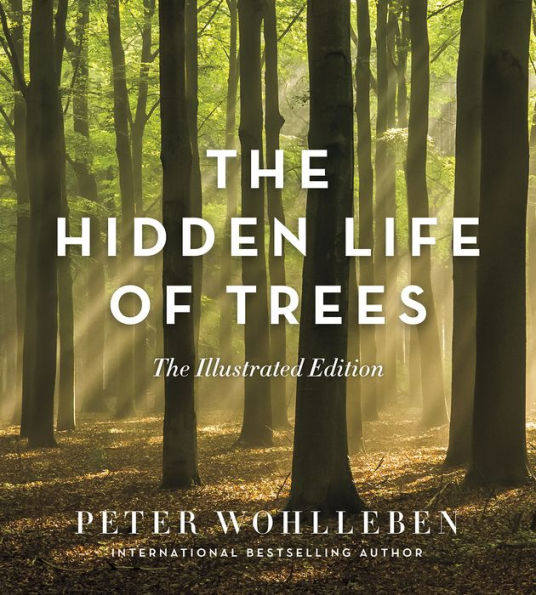

The Hidden Life of Trees: The Illustrated Edition

The Hidden Life of Trees:  The Illustrated Edition, by Peter Wohlleben, Greystone Books Ltd./David Suzuki Institute, 2015/2016/2018. 

   The text in this edition is abridged from the original (and I still need to find and read the original), but the photographs are sublime.  This book is an excellent and easily readable introduction to forest ecology, incorporating many of the recent breakthroughs in our knowledge. (Note:  Peter Wohlleben is an author and has worked for the forestry commission in Germany for over 20 years.  He now manages a forest academy and a natural woodland in Germany.)

What did I gain from reading this book?  Just opening this book and looking at the gorgeous photos relaxes me.  It is absolutely beautiful.  More than simply being a "pretty face", though, this book was a great summary of the workings of forests.
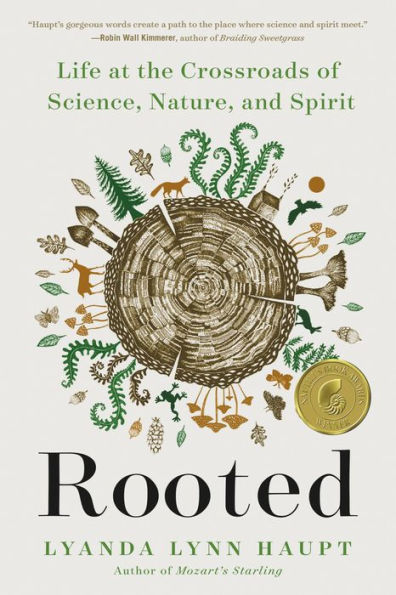

Rooted: Life at the Crossroads of Science, Nature, and Spirit

Rooted: Life at the Crossroads of Science, Nature, and Spirit, by Lyanda Lynn Haupt,  Little, Brown Spark/Hachette Book Group, 2021.

    Rooted is very different from the other books that I have talked about here.  It is based in science, but it is also part philosophy, part spiritual guidance, and part nature guide.  Weaving in quotes from a wide variety of people like Mary Oliver, John O'Donoghue,  Robert Macfarlane, Merlin Sheldrake, and Richard Louv, this book is a rich tapestry from which to draw inspiration and a deep sense of connection with the natural world.

What did I gain from reading this book?  As I read this book, I felt a variety of strands from my life and my reading come together in new ways, highlighting possibilities and encouraging changes in the way I relate to the natural world.  After I finish reading a book, assuming I decide to keep it, I store each one in a  different area, based on how I think I'll access or use it in the future:  plant or animal reference book, general ecological principles, environmental commentary, gardening, poetry, and so forth.  This book is one of the few I keep at my bedside so that I can dip into it for inspiration and rejuvenation when I'm feeling my well run dry.
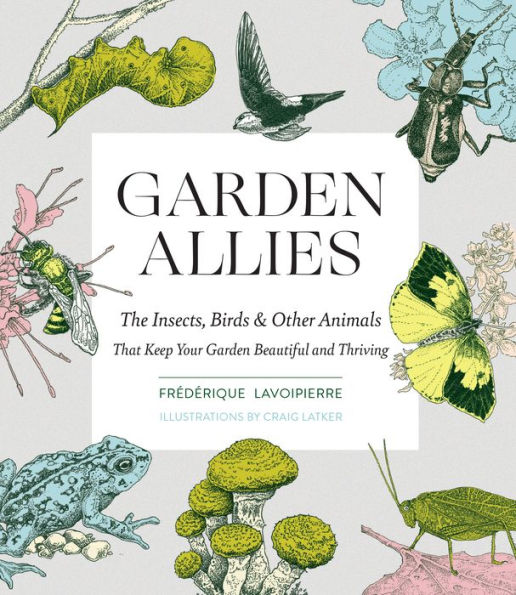
 

Garden Allies: The Insects, Birds, and Other Animals That Keep Your Garden Beautiful and Thriving

Garden Allies: The Insects, Birds & Other Animals That Keep Your Garden Beautiful and Thriving, by Frederique Lavoipierre, Timber Press, Portland, Oregon, 2021.

    A chapter subheading sums up this book well:  "Actors on Your Garden's Stage".  While other books I read in 2023 talked about all the insects and other animals that share life in and on trees, this book does the same for our gardens.  If you read this book, you'll recognize many, many more of the "little  guys" you see in your garden.  (Note:  Frrederique Lavoipierre has a Masters Degree in Biology with an emphasis on ecological principles of sustainable landscaping;  she was written and worked in this field in numerous capacities.)

What did I gain from reading this book?  Garden Allies was a wonderful introduction to a wide variety of the beings that we see in our yards and gardens.  It would be especially useful for someone wanting to learn more about the variety of "bugs" they encounter in their garden.

Silent Earth: Averting the Insect Apocalypse

Silent Earth: Averting the Insect Apocalypse, by Dave Goulson, Harper (HarperCollins), 2021.

    For me, this is simply the best book on what's going on with insect declines.  Not only is there good information on insects themselves, there is excellent background on pesticides and changing farming practices, how artificial fertilizers affect insects, the effects of climate change, and the surprising problem of light pollution.  One of the most memorable sections of this book was Goulson's imaginative trip 50-60 years into the future, pondering what life might be like then if we didn't manage to protect insects now.  The last section of this book is titled "What Can We Do?" and, in it, Goulson outlines specific tasks that we can each do to help protect insect populations.  (Note:  Dave Goulson is Professor of Biology at the University of Sussex in Great Britain.)

What did I gain from reading this book?  Simply put, while Milman's book, The Insect Crisis, was good, this book was excellent at defining the problem of insect decline and also, critically, on giving us concrete suggestions that we each can do to avert the "insect apocalypse".


The New Climate War: The Fight to Take Back Our Planet

The New Climate War: The Fight to Take Back Our Planet, by Michael E. Mann, PublicAffairs (Hachette Book Group), 2021.

    Michael Mann is a climate scientist who has, for decades, been at the forefront of trying to awaken our country to the looming reality of the climate crisis.   This book is about the history of our understanding about global warming and the history of the fight against action to solve this extreme threat to our world.   This is a call to action, and Mann emphasizes that it is NOT too late to act; he helps us see the way forward.  He is adamant that solving the climate crisis will take more than individual action, and he points us in the direction we need to work. (Note:  Michael E. Mann is a Professor of Atmospheric Science at Penn State.)

What did I gain from reading this book?  Having read about Mann's climate work for decades, I found it fascinating to read his story of how climate policies have been submarined by the fossil fuel industry over the years.  The tactics the industry has used have been impressively effective.  Mann himself has been personally vilified in the industry's quest to "Damn the torpedoes and full speed ahead!"  We don't think of scientists as warrior heroes, but Mann has been at the forefront of this battle, fighting for the future for all of us.   
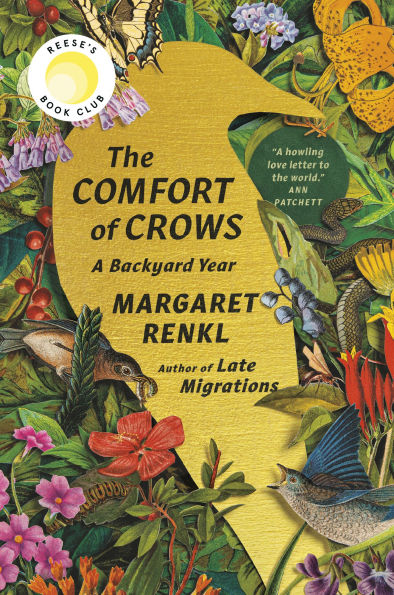

The Comfort of Crows (Reese's Book Club Pick): A Backyard Year

The Comfort of Crows: A Backyard Year, by Margaret Renkl, Spiegel & Grau, New York, 2023.

    Accompanied by a series of delightful artworks depicting nature, this book is a collection of thoughtful and poignant essays on the wildlife all around us in our home landscapes.  Tales of ecstasy and tragedy, musings filled with love and concern, every time I think of reading this book, I reflexively smile.  (Note:  Margaret Renkl is the author of several books and a contributing writer for the New York Times.)

What did I gain from reading this book?  This book gave me beauty and richness and a sense of camaraderie with the author.
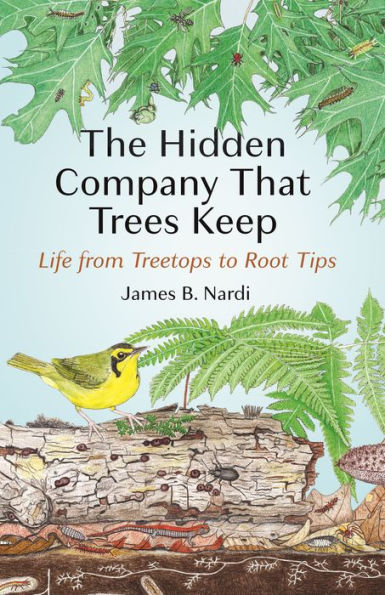
   

The Hidden Company That Trees Keep: Life from Treetops to Root Tips

The Hidden Company That Trees Keep: Life from Treetops to Root Tips, by James B. Nardi, Princeton University Press, 2023.

    When I look at a tree, I look for the animals in and around it, too.  Until I read this book, I usually saw just birds, squirrels, and maybe a few caterpillars.  In this book, Nardi goes much deeper, showing the interconnected webs of hundreds of organisms that are supported by each tree and that support the tree, as well.  He takes each part of the tree and describes the other organisms interacting with that part specifically:  leaves, twigs & buds, the circulatory system, the trunk, the roots, the flowers & fruits.  Who makes galls?  How do trees respond to insect or disease attacks?  What animals help the trees protect themselves?  The richness and diversity Nardi describes are breathtaking. (Note:  James Nardi is a research scientist in biology at the University of Illinois, Urbana-Champaign.)

What did I gain from reading this book?  I love taking walks around our yard and photographing every animal I can find, big or small.  Many of the animals I find are small...and odd looking to my eyes.  This book helped me understand the complex interactions between the animals I observe and the trees in our yard.  I underlined so much as "important - I want to remember this" that there's hardly a page I haven't marked in some way!
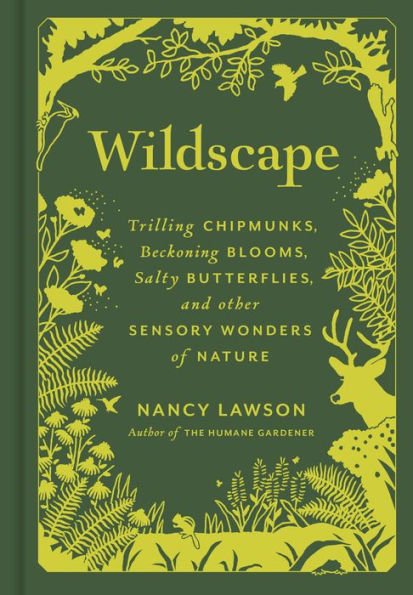
 

Wildscape: Trilling Chipmunks, Beckoning Blooms, Salty Butterflies, and other Sensory Wonders of Nature

Wildscape: Trilling Chipmunds, Beckoning Blooms, Salty Butterflies, and Other Sensory Wonders of Nature, by Nancy Lawson, Princeton Architectural Press, 2023.

    Evocative is the best word I can come up with to describe Nancy Lawson's latest book.  In the grand scheme of things, her Maryland garden doesn't lie all that far from our southeast Virginia one, so she almost feels like a next door neighbor as she talks about the plants and animals in her yard.  And the stories she tells!  Flea beetles helping monarchs in their quest for protective chemicals from milkweeds.  Chipmunks and mice spreading mycorrhizal fungi that connect and nurture plants.  The difference between the songs of "city birds" and "country birds" in the white-throated sparrow population.  The rich discoveries in this book give an increased depth to my experiences in the landscape. (Note: Nancy Lawson is an author, conservationist, and lecturer.)

What did I gain from reading this book?  Nancy Lawson has the gift of loving the unloved - and helping me to love them too.  I see certain plants and animals with new eyes after reading her books or listening to her lectures.  In this book, she took me on a fascinating nature walk, helping me decode some of the behavior or animal traces that I see...or hear...or smell...or touch in the landscape, while helping me appreciate the complexity of plant-animal relationships even more deeply. 


So many books, so little time.....

I hope you're able to find the time to pick up one or more of these books so you can enjoy them too.


Wednesday, June 15, 2016

Smiling at Wasps

Just outside our kitchen window are the lower branches of a pignut hickory tree.  The leaves are typical for hickory in June - bright green, compound, and in pretty good condition, but nothing showy or unusual.  Often, when I look out the window, I see a wasp or two flying in and out of the leaves, seeming to inspect them top and bottom.

A few years ago I would have freaked out a bit.  Where was the wasp nest?  Would I get stung as I was changing out the hummingbird feeder water or emptying and refilling the small birdbath just below these branches?  What is that wasp DOING out there?!

Now I relax...and quietly thank each wasp I see.  Why this change in my attitude?

After living on this Earth for almost 60 years, I finally realized that wasps weren't my enemies, they were my friends.  The wasps I see inspecting the hickory leaves are looking for caterpillars to paralyze and take to their nest as food for their progeny.  Those very wasps are probably almost completely responsible for the fact that the hickory leaves still look good, even this early in the growing season.  To my knowledge, all wasp young are raised on meat, a.k.a. caterpillars and other insects/arthropods.  Some wasp species hunt cicadas, some wasp species hunt grasshoppers, some wasp species hunt spiders...and many wasp species hunt caterpillars.

Meanwhile, most adult wasps feed on nectar and/or pollen.  You can often see them feeding on flowers, as in my photo from Kansas, taken in October, 2014.

It's only in defense of their nest - their eggs and young and queen - that wasps generally get nasty-tempered, and many wasps are solitary nesters, so they don't get nasty-tempered even then.

Meanwhile, the female wasps patrol our yards and gardens all day long, hunting for the caterpillars or even grasshoppers munching on our plants.

Will I happily allow a paper wasp nest to be built right outside a commonly used doorway?  No.  However, I do allow mud daubers to build there, since they are solitary wasps and not aggressive.  Now, too, I allow paper wasp nests to be built in out-of-the-way places, although I do note carefully where they are, so I can steer clear of them.

It never ceases to amaze me how well "nature" works when we get out of its way.  It's never as scary as it seems before we take the time to realize what's actually going on.
 

Sunday, February 28, 2016

A Good Book And Some Humble (Oak) Pie

It's such a rookie mistake!  I knew there were several species of evergreen oaks down here.

But let me start again.... 

A while back, I discovered a promising book on Amazon.com, Finding Home in the Sandy Lands of the South: A Naturalist's Journey in Florida, by Francis E. "Jack" Putz.  Despite having absolutely no extra room for books in the house, I convinced myself that I truly needed this addition to my library. After all, we were talking about an author from the north (who was a naturalist!), living in the same general ecosystem we've just moved to, writing about what he's discovered about the plants and animals of the area since he moved here.  Of course I bought it.

Then, equally "logically", Sandy Lands stayed on my bedside bookshelf "maturing" for a while until the time seemed right to read it.  That time came a few days ago, as the weather and my schedule started to coalesce, making gardening seem more possible after our move.

As I delved into the book, I enjoyed Dr. Putz's tales of botanical and other adventures immensely, reading some of them aloud to Greg so that he could share them too.  Both of us decided that we would love to live in an environmentally focused, land trust based, community neighborhood like Flamingo Hammock, the spot near Gainesville that Dr. Putz has called home for many years now.  I know many of the species that were mentioned in his vignettes, so I could accurately picture them as I read, but I learned all sorts of additional, interesting bits and pieces, creating a much fuller understanding of our new habitat.

If you live in the southeastern coastal plain region, this is an enjoyable and informative read - I highly recommend it.  Actually, it's an enjoyable and informative read even if you don't live in this region!

Getting back on topic, I highly recommend this book, in fact, despite the fact that it has made me feel like a total dunce about my basic plant identification skills.  

The problem started when I read the chapter on "Liberating Live Oaks".  Our neighborhood is lucky in having many, many live oak (Quercus virginiana) and sand live oak (Q. geminata) trees, draped with Spanish moss, defining the landscape.  The original developer's daughter apparently loved the trees and convinced her father to save as many as he possibly could when he was building the homes.  Truthfully, the live oak trees were what drew our daughter to the neighborhood, when she moved to Ft. Walton Beach almost 5 years ago.  (She and our grandson were what drew us to the neighborhood...but the live oaks certainly helped clinch the deal.)

Putz, however, was talking about the decline of these beautiful old live oaks due to the encroachment of other hardwood trees, and he listed several species of particular concern that tend to grow fast and tall, overtopping established live oaks and causing their decline.  The problematic trees he mentioned specifically were laurel oak (Q. hemisphaerica), water oak (Q. nigra), and sweetgum (Liquidambar styraciflua).

Suddenly I remembered an earlier essay where he had mentioned that laurel oaks and live oaks could be difficult to tell apart, with similarly sized and shaped leaves.  And he was constantly, constantly talking about having to cut out laurel oaks that freely seeded and grew - fast - to crowd out all sorts of other plants.

Oh, no!  I had thought that the reason the live oaks in our back yard - left, center and right - were dying was because of the construction of the seawall back there, 8 years ago...but what if they weren't actually live oaks at all? With fear and trembling in my heart - but really knowing the answer already - I went outside and looked specifically at the back sides of the leaves of my trees:  shiny and bright green, not dull and whitish from tiny hairs.  Horrors!  Not only were all the "live oak" trees in the back yard actually laurel oaks, but even the big "live oak" in the front yard was a laurel oak!  No wonder they were all beginning to decline.

To add insult to injury, I've been flagging seedling oak trees in the yard, thinking to save a few of the best placed ones but, when I looked, all of the seedlings - every single one - was a laurel oak as well.

I guess the best lesson to take away from this humbling experience is to keep learning and to keep questioning my own assumptions.  I am truly glad that I realized my mistake now, and not 5 years from now, when the young laurel oak seedlings were well established and hard to pull out.  Now I need to decide whether to find tiny live oak seedlings to transplant from neighbors' yards, keeping the local ecotype going, or whether to buy commercially grown young trees for planting.  I want to use live oaks for their longevity and wind resistance, even though we'll be long gone before they mature.

One thing's for sure:  I'm glad I read Jack Putz's book and I'm glad I questioned my original identification.  I'd much rather know the truth than believe in a comfortable lie.  In the long run, as my son says, "It's all good."

Thursday, April 09, 2015

Maintenance in the Native Plant Garden: Springtime Editing, Part 1

As I mentioned in my last post, one of the tasks that I find needs to be done each spring is editing.   When you invite animals (especially birds) into your gardens, you are going to get quite a few seeds planted, all of which will be encouraged to grow with a nice dollop of fertilizer.  Many of these will not be plants that you want growing, especially not where they've been planted.

Of course, too, native plants are designed to reproduce on their own...and if they are happy where you've planted them, they may well decide to "go forth and multiply".   Some species are notorious for this, while others reseed or spread only when the conditions are particularly perfect.

So, as the native plant gardener, you can keep things looking relatively tidy simply by removing excess plants once a year - and I find that early spring is the best time to transplant.  Why not take advantage of free plants?!

Personally, I fully understand the need to edit plants out...but I have a terribly hard time actually doing it, especially if I have to discard the plants I remove.  To be truthful, I've gone for years without editing, so my beds tend to get somewhat overgrown at times.  Of course, I like the full, cottage garden look, so this doesn't usually bother me too much, but if you like a more controlled look, editing out is a step that you won't want to skip.

So, on to the actual editing that I'm doing this spring.

Once I got the two areas of my front garden bed appropriately and fully cut back this morning, it was much easier to evaluate what needed to be removed or moved.

The Peach Blossom tulips are planted almost on top of a penstemon, which isn't really a problem as the tulips will die back shortly...but there was also a healthy looking young honeysuckle growing up beside them.  You can see it growing from the base of the plant tag in the photo above.  I DO NOT want a 10' honeysuckle shrub in this location, so that seedling had to go.  Given their invasive nature around here, I don't have any qualms about getting rid of honeysuckle seedlings.  For that reason, I don't like to pass along honeysuckles, either. 

For this honeysuckle seedling, a single stab with a dandelion remover to loosen the soil around its roots, followed by a strong yank, removed it, root and all.

In the center of this next photo is an area under the Callery pear that I've not paid much attention to in the past.  If you look carefully, you can see 3 "small," skinny, woody, hackberry saplings.  At the base of the white plant tag there is a clump of green that is actually a cluster of seedlings which includes a honeysuckle and several Callery pears.  There is another biggish honeysuckle seedling to the left of the plant tag, and there are dozens of Callery pear seedlings in the center of this spot, too.  ALL of these baby woody plants had to go, or this will become a thicket in next to no time.

In removing woody seedlings, the sooner you get to them, the better.  That's why an annual sweep is such a good thing.  For the hardy plants that survive on the Plains, the roots will go down deep and strong;  by the time even a year has passed, getting a woody seedling out of the ground is infinitely harder than removing it shortly after it has germinated.  Give one of these plants a couple years' growth and it's going to be hard to remove without utilizing Roundup, probably multiple times.

On the other hand, if you catch a young tree seedling shortly after it has germinated, all you need to do is give a slight tug and it slips out of the ground, root and all.  If you break off the stem at this stage, there's no problem of future growth, because the plant has no reserves yet in its roots.

It's all about the roots, 'bout the roots, no cutting....  (Confession time:  I found myself singing, "It's all about the roots, 'bout the roots, no cutting...." to the tune of "All About the Bass" for way more time than was rational today.  You're welcome for the earworm, by the way.)  Once a native prairie, woody plant is established, if you simply cut it off at ground level, it will just come back, stronger than before.  Prairie plants are like that.

In the spot above, I had to dig down and cut out the hackberry seedlings as far below the soil line as I could manage.  It remains to be seen if that was far enough down to kill the plants.  If not, I'll have to repeat the process or resort to Roundup.  The honeysuckles came out with strong tugs, roots and all.  I must have pulled out 50 pear seedlings - but they were easy, as the soil was moist (I watered) and they had just germinated this spring. 

This little hackberry seedling located right next to the walkway is one that I let get too big shortly after said walkway was put in, then cut out a year or two ago.  Obviously I didn't get down far enough on the roots when I originally tried to remove it, so I had to repeat the process today.  Hopefully today's butchering will do the trick.

I have a LOT of Callery pears germinating in my beds this year.  Callery pear, Prunus calleryana, is the official species of pear that I usually call "Bradford pear."  Bradford pear is actually a cultivar of Callery pear, but there are also many other varieties of Callery pear on the market these days. This is not a native species, but the tree came with the house and I haven't had the temerity to cut it down.  As pretty as it is in the spring, it reseeds ridiculously.  I consider it a real nuisance plant.

I've got more plant editing that I want/need to do in these beds, but I'm waiting for a friend to come over and get some of the plants when I take them out.  Yeah, I'm putting off the next stage of editing again....  I'll show you that stage next time - I promise!

Sunday, September 14, 2014

Diversity!

Greg gave me a gift for Christmas last year - Access (the software program, which unfortunately doesn't automatically come with the home version of Office) so that I could begin to keep a coherent database of all the plants and animals that I've found on our 10 acres.

I have been slowly working on this project in the intervening months, and I'm far from done.  For the most part, I've been utilizing the photos I've taken over the years to remind me of what I've found and where I've found it.


For example, I saw this flower beetle (Batyle suturalis) on Black-Eyed Susan (Rudbeckia hirta) in the Back Five early in July this year; both species are now in my database.


The wonderful folks at BugGuide.net are probably quite sick of me, as I've been submitting quite a few photos for their help with identification - which has been wonderful and greatly appreciated.  I can usually get an unknown insect down to order and often to family, using my experience and (if necessary) Borror and DeLong's Introduction to the Study of Insects for its excellent keys .  Then I try, utilizing BugGuide's online guides, to get the insect down to genus and species, but without actual keys specifying what I'm looking for, it can be hard.  It's at this point that I will submit an image for help.


Other species are often easier.  For example, I've been birding for years, so I have a reasonable familiarity with bird species and I can trust my identifications and the species lists I've been keeping since we moved in.  (Besides, it is much easier to figure out which of 450+ possible species a bird is compared to figuring out which of thousands of possible species an insect is.)  Below, for example, is a red-winged blackbird watching a little blue heron, who hung out in our lagoon for several days in 2009.

There are a variety of books and online resources I go to for plant identifications:  Michael Haddock's book and website on Wildflowers and Grassses of Kansas.  Janet Bare's book, Wildflowers and Weeds of Kansas.  Stephen's book, Trees, Shrubs and Woody Vines in Kansas.  And many, many more.

I've recently purchased Bradley's book, Common Spiders of North America, to improve my ability to identify the spiders that I'm seeing.  BugGuide is also useful with spiders, and I have a few other guidebooks (although most are much less comprehensive than Bradley's).  Below is a male jumping spider (Phidippus clarus) which I photographed last summer hanging out on giant ragweed (Ambrosia trifida).

There are, obviously, many more references that I use to compile my species lists, but that isn't the point of this post.  Right now, according to my Access database, I have 201 plant species that I've found (or planted) on our 10 acres, 157 species of insects, 3 species of amphibians, 8 species of mammals, 1 species of snake, and 5 species of turtles.  (I have found quite a few more species of amphibians, mammals, snakes and turtles than that, but I haven't put them into my Access database yet.)  My yard list has 121 bird species so far.  That includes birds seen ON our property, as well as FROM our property (i.e. flying overhead during migration or seen from our property but physically on our neighbors' land).  I haven't started a list of spider species yet, but in looking in my photo organizer, I easily have at least a dozen different species.  Then there are the assorted invertebrates not covered by "insect" and "spider" catergories, species like prairie crayfish, roly-polies, and daddy longlegs.


Here is a boreal chorus frog (Pseudacris maculata) in the buffalo grass (Bouteloua dactyloides) of our front lawn last August.


So, in the 7 1/2 years we've lived here, I have documented (so far) 310 animal species and 201 plant species sharing our 10 acres with us.


Why am I posting about this right now?  Because in yesterday's Wichita Eagle, there was an article about Chisholm Creek Park in northeast Wichita.  The article was actually about algae in the lake there, but there was a brief aside saying that "[t]he park is home to 163 species of plants and 214 species of animals...."  Chisholm Creek Park is large - 282 acres, according to the website of the Great Plains Nature Center, which is located there.

I have documented about 25% more species of plant species and almost 50% more species of animals on our 10 acres than have been documented in the 282 acres of Chisholm Creek Park in the same county.

Does this mean that there really ARE that many more species on our little 10 acres than in Chisholm Creek Park?  No.  Absolutely not.  The species summary list on the Great Plains Nature Center site above does not give any number of species at all for invertebrates or grasses, for example, and their numbers for birds, mammals, reptiles and amphibians are all greater than the number I've observed on our property.  Chisholm Creek Park also has fish species, while we have no year-round water habitat except our lagoon.

I've just been more meticulous about recording (and identifying) the variety of species I've found here, particularly the species of insects and other invertebrates, than the folks in charge of that park have had the time or the inclination to do.  Still, it was definitely a psychological boost to realize just how diverse a piece of property we actually have!

Do you keep any sort of species list of what you've identified on your property?   If so, what sorts of insights or discoveries has that process given you?

Read more here: http://www.kansas.com/news/local/article2095022.html#storylink=cpy


Monday, April 21, 2014

Lousy Photos Still Have Their Value

Having set myself the task, last year, of documenting all of the plants and animals that I can identify on our 10 acres, I have found myself overwhelmed with photos in short order now that spring has arrived. 

It's MUCH easier to take photos of insects than it is to identify them.  Just in case you wondered.

It's also much easier to take photos of insects than it is to take GOOD photos of insects - good photos being defined as photos where you have a snowball's chance of actually identifying the insect in question based on what you are seeing on the screen in front of you.  I learned my basic insect identification skills the "good" old fashioned way, a.k.a. by capturing the insects and killing them, then identifying them at my leisure through the use of various magnifying devices and dichotomous keys.

I prefer trying to identify living insects in blurry photos, even if it means I won't get many of them actually identified.  I'm just not into killing living beings of any sort, if I can avoid it.  So here are a few of my so-so photos, some of which I've managed to identify and some of which are still mysteries to me....

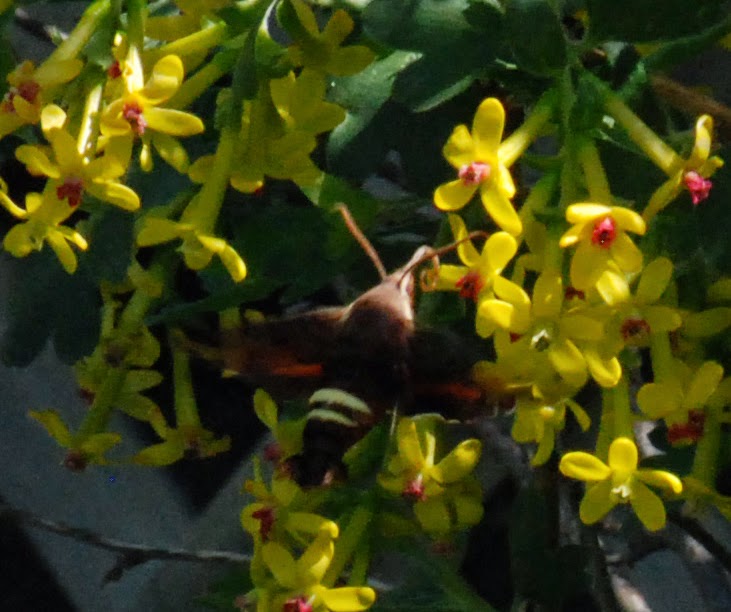
The clove currant (Ribes odoratum) is in sweet, full and glorious bloom right now.  On Saturday, when I stopped by it, I noticed a dark hawk moth feeding.   The wings blurred rusty brown as the moth moved from bloom to bloom, while the heavy abdomen had a tuft at its end and was encircled by 2 bright yellow bands. I'd never seen this particular hawk moth before, so I tried to take its picture, thinking I could identify it more accurately if I had a good photo.  The blasted little beast was definitely camera shy and not very trusting of giant beings standing nearby with big black boxes stuck up near their face.  It tended to keep to the far side of the plants, rather than venturing out into the open near to me.

Thank heavens for digital.  Fifteen photos later, the moth flew away and I've not seen it since.  When I checked out those 15 shots to see what I'd managed to capture, sadly this was the BEST image of the lot.

As lousy as this photo is, I was still able to use it to identify my "dark" hawk moth as a Nessus Sphinx Moth (Amphion floridensis).  This species is supposedly one of the more commonly encountered day-flying moths, but I've never seen one before.  The larvae/ caterpillars, which are a type of hornworm, feed on grape, Ampelopsis, and Capsicum (bell and hot pepper) plants, all of which are frequent in our yard.

Looking around under one of our green ash trees (Fraxinus pennsylvanica), I noticed some small, gnat-like creatures flying.  When one came to rest within my sightline, I decided to snap its picture.  Then I noticed a second one nearby.  Snap.  Snap.  Snap.  These little creatures were about 1/4" or 3/8" long, colored gray and sitting on gray bark.  I have no idea why I thought I could get a good photo.  Here's what I managed to capture, 26 photos later, ....

I didn't think this silhouette would show me much at first, but when I zoomed in, I noticed that the "big" fly had a small fly caught underneath it, held in a classic "I'm eating you" sort of position.  When I showed it to Greg, he immediately thought the "big fly" was a robber fly of some sort.  I can go with that.

Another shot of the same individual accidentally captured a second "big fly" just above it on the bark. 

Do you see the 2 of them?  The one in the bottom right of the photo is the one shown in silhouette above; the second one is in the top left of the photo.  When I zoomed in on the second individual, it also seemed to have some sort of fly prey - with a yellow tipped abdomen - caught.
From the top, there's little evidence of "big fly #1" having prey captured beneath it, but the silhouette shot accidentally revealed the secret.

I haven't decided yet whether I'm going to try to submit these photos to Bug Guide or not - my feel is that they are not good enough for any sort of identification, but maybe I'll chance it anyway.  I do think these are tiny robber flies and I'd love to see if anyone can tell me any more about them.

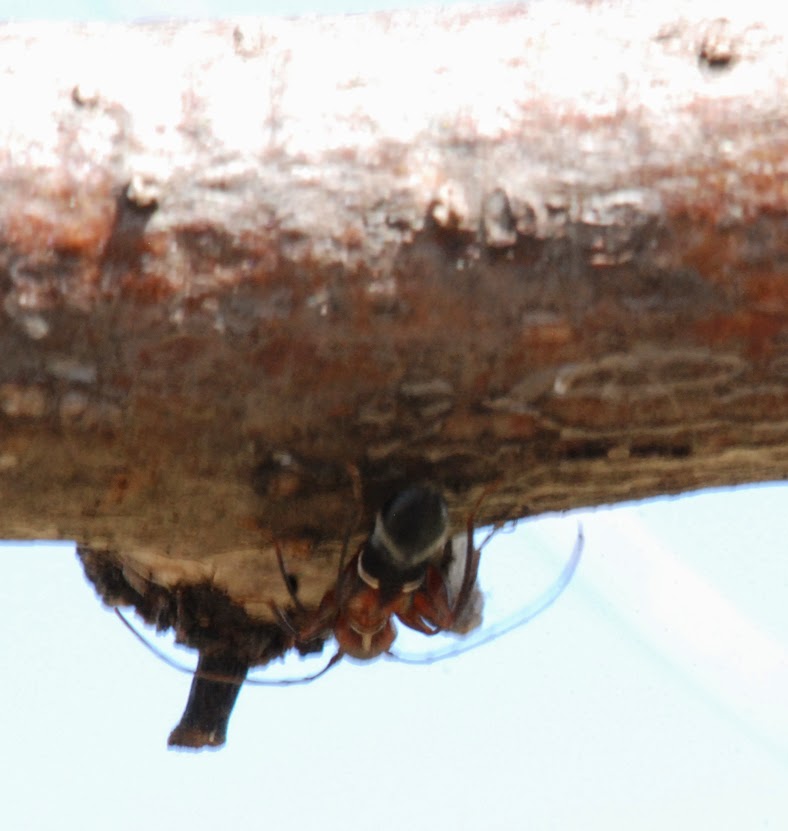
Another lousy picture that nonetheless taught me something new about the creatures in our yard was this one, taken Saturday of some sort of critter on the underside of a small honeylocust branch....

When I took the photo, I thought the mess of moving legs was perhaps an emerging wheel bug.  As I took several more shots, I changed my mind to thinking I was looking at a brightly colored ant.  As I took the very last picture, something clicked and made me think, "Beetle?"  When I looked it up, sure enough, beetle was correct!  This is an Antlike Longhorned Beetle (Euderces pini).  The larvae of this beetle feed on dead wood in a variety of types of trees; the adults are typically seen nectaring at flowers.  The adults mimic ants and are notoriously hard to photograph because they never quit moving.  This is another insect that tops out around 3/8" long.  As lousy as my photos of this creature are (and this is the best of the lot), I feel lucky that I got a couple shots that allowed me to identify it at all.

As you can tell, I've got a LO-O-O-ONG way to go before I get very decent at taking good insect photos, but I do have fun and I learn a lot, even at the level of (in)competence that I have attained.  The natural world seems more wondrous every day.

Monday, June 24, 2013

An Exciting Variation on a Theme?

Last week I was up in Iowa, getting together with family to celebrate the life (and mourn the passing) of an uncle of mine - a musician and teacher of music who shared his gift widely and passed along his knowledge to many.  He was one of those individuals who truly brought more beauty into this world through his living.

But on to the reason for my post.  While there, we visited the home of a relative renowned for her gardens, her cooking, and her hospitality...who just happened to have a rather unusual tree in her yard.  Looking around, we noticed a similar tree in a neighbor's yard as well.

These two maples had sections of leaves that were beautifully variegated.  Apparently Henrietta's tree, at least, had not been purchased as a variegated specimen.  In fact, according to her, it did not have any variegation in its foliage until she and her husband decided to move it from the front yard to the back, disappointed that it hadn't grown very well in the front yard.  After they moved it, the variegation appeared.

Apparently, this is how the leaves emerge.  As the summer goes on, the variegation disappears and the leaves turn to full green.  They color normally in the fall.  And repeat each year.

Is this a response to something in the soil?  A virus?  A genetic mutation?  I have no idea and would welcome any thoughts.  Meanwhile, I thought it was cool enough - and pretty enough - to share it.

I must admit to wondering if it could be propagated.....


Sunday, June 09, 2013

Community Rules: Prairie Larkspur and Friends

Neighborly generosity ruled on Friday evening - Sid, one of my fellow Master Gardeners and also a fellow Clearwater-ian (?!), had called that morning to tell me he had prairie larkspur (Delphinium carolinianum) blooming in his pasture.  Did I want to take a look?

Did I want to take a look?  Heck, yes, I wanted to take a look! I wanted to take a couple pictures, too, if he didn't mind.  He didn't, so we set a time in the evening, when the light would be good, for me to drop by.  At the appointed time, my camera and I made the journey over to Sid's house and off we went on a tour of exploration. 

Sid is a descendant of one of the original homesteaders in the area.  Even more amazing to me is that he and his wife live on land that was actually claimed and homesteaded by his pioneer ancestors.  In a culture often characterized by rootlessness, Sid's roots run deep, right where he, himself, is planted. 

The first thing Sid pointed out to me were three trees, 2 of which he planted as seedlings about 25 years ago.

On the left is a bur oak (Quercus macrocarpa), in the center is a catalpa (Catalpa speciosa), and on the right is an osage orange (Maclura pomifera).  The differing growth patterns of these tree species are so beautifully highlighted here:  the lighter green, large-leaved, upright catalpa in the middle; the young, but soon to be rugged, dark green presence of the bur oak; the gently arching, bright green dignity of the old osage orange, allowed to grow into its natural form, rather than having been hacked back into tortured crippledness.  I'm hoping to get invited back in the winter to take a photo comparing their bare branch structures.

Sid led me up to the catalpa so that I could take a couple photos of its flowers.  They were high enough up in the tree that I couldn't get too close, but Sid snagged a couple individual blooms to let me take in their sweet, rich fragrance.

As we walked on, I saw purple poppymallow, yarrow, spiderwort (with its flowers done for the day), cats claw sensitive brier, and many other prairie natives.  There were several blue Baptisia plants and one large cream Baptisia whose blooms were done for the year.

Then we came upon the prairie larkspur...

and I realized that I had seen it before, from a car window whizzing by as we traveled 60 mph down the road.  However, I'd mistaken the dainty, white spires for a small species of Penstemon.

Up close, the spurs of "larkspur" were obvious in the blossoms

and the dainty, fern-like leaves also reminded me of my domestic larkspur. 

How in the world do those fragile leaves collect enough energy to send up such a large and glorious bloom spike?

In the same general area as the larkspur were many seed heads of another prairie plant it had taken me a long time to find and recognize: Junegrass (Koeleria macrantha).

To be sure that I was identifying this grass properly, several years ago I'd finally purchased a couple plants at the Dyck Arboretum plant sale and placed them in my flower beds.  They've done well there and it's become one of my favorite native grasses to garden with - not too tall, nicely clumping, with attractive seedheads that hang on throughout the year.  It's one of the few cool season grasses in the prairie, too, so it greens up, flowers and seeds earlier than most other grasses here.

There were many other interesting plants in the prairie, but the last one I'll share with you was a glorious blue wild indigo (Baptisia australis).

Walking back up to the house, I happened to see an older blue baptisia bloom spike that was developing seed pods, highlighted against the sun.  In the larger pods were what looked like drops of water - seeds just beginning to develop?  I don't know, but the richness of the colors and the image made me happy, so I'm sharing it here with you.

There is so much beauty around us: in nature, in friends, and in communities.  Here's a mental toast to that beauty in all its many forms!

Thursday, May 02, 2013

Red-Tails at Home

A couple weeks ago, Greg and I went on our first big outing in the new dogmobile, complete with The Boys in the back.  We decided to head down to Elk City Reservoir to check out the hiking trails there.

The wonderful hike we had that day is fodder for another blog post, but we lucked out on the way there, too.  We were just getting on to the Turnpike when I noticed a big nest in a cottonwood near the road and asked Greg to pull off so I could catch a photo or two.  As we stopped, I thought I saw a head in the nest.  Zooming in confirmed my sighting.

While I was taking a photo or two, the hawk on the nest stood up and started looking around....

At that point, I thought to take a shot with a wider view to document some of the surrounding landscape....

Suddenly, through the lens, I realized that a second hawk had swooped in to the nest.  Hawk 1 flew off, as Hawk 2 flew in.

It didn't take much time at all for Hawk 2 to settle in; obviously this was a well rehearsed changing of the guard.

Hawk 1 flew off to a nearby tree and settled in for a break from nursery duties.

The excitement seemed to be over for the moment, so I got back in the car and we resumed our trip.  Not bad, though, for a brief roadside stop!

Sunday, March 24, 2013

The Curious Gardener

Winter is traditionally the time for gardeners to cocoon, reading seed catalogs and gardening books, but after the last 2 years of heat and drought, I had precious little interest in either this winter...

...until The Snow.  The Snow occurred in late February and rejuvenated much more than my flickering gardening spirit.  With a little moisture and the beginning of spring's warmer temperatures, daffodils and other bulbs started pushing their way up through the soil, chorus frogs soon started singing, and it seemed like there was some hope for a growing season after all.

The Snow revived my interest in gardening-type publications, as well.  For some unknown reason, I was compelled to pick up a book I'd never heard of but had purchased, on a whim, at the Half Price Book Store in San Antonio, Texas, several years ago.  It had aged appropriately on one of my many (book) piles and seemed to be calling my name.

The Curious Gardener is by Jurgen Dahl, a German bookseller turned garden writer.  He received several journalistic awards during his life and was the author of a dozen books.  Dahl passed away in 2001, but this translation of 3 of his books was published by Timber Press in 2004.

I have not, to my knowledge, read any other books by German gardeners and it was interesting to see that gardening in Germany gave him a slightly different outlook than gardening in England or in the U.S. would have done.  The cultural myths surrounding plants varied from the myths I've been accustomed to reading, for example.

Particularly striking, for me, were Dahl's passages on our native plants, which were, of course, not native for him.  For example, on page 157 he talks about eating the flower buds of sunflower (Helianthus annuus), saying that they taste rather like artichokes when properly prepared.  In fact, some people apparently prefer them to artichokes.

Dahl gives a lot of information on culinary and medicinal uses for plants of all types.  He is an adventurous eater, trying many things that seem a little "on the edge" to my more American palate.

Here are just a sampling of the tidbits I found interesting in this book....

If you cover dandelions with a clay cloche, their leaves blanch and are less bitter when you eat them.  Apparently, this is very popular to do in England.

Turkey tail shelf fungus, dried, used to be worn as a decoration on ladies' black velvet hats.

Sweet potatoes, sliced and panfried, then served with oil and vinegar, are said to strengthen the body...and the libido!

There is a plant called opium lettuce, in the lettuce genus, whose sap can be dried and then supposedly used as a painkiller and sleep aid.  It apparently is not addictive and has no side effects.  (Please note:  I am in no way advocating this!  I am just reporting what someone else has written.)

I'll leave you with Dahl's description of sassafras, a native-to-the-U.S. tree that is rarely glorified here in our own country,
Perhaps [our new tree] will be a sassafras, an Appalachian fever tree, a miracle in scents and colors.  Its timber and bark and roots smell of cloves and camphor with a whiff of fennel.  An oil distilled from it can be used to add that tempting scent to soaps and tobaccos.  And the magnificent orange and red of its leaves are said to be among the most beautiful fall colors to exist anywhere.  Finally, its leaves have differing oval and lobed shapes, so it is just the right thing to commemorate unique people.
Dahl's description of sassafras is rather different from the normal description heard here, where it's native, isn't it?!

Friday, December 28, 2012

Tallgrass Prairie National Preserve

Years ago - sometimes it seems like it was in another life - I worked with and for the Kansas Audubon Council.  One of our projects at the time was trying to get the Z-Bar Ranch, as it was known then, into federal protection as a national park.  Through the work of many dedicated people and organizations, with the Kansas office of The Nature Conservancy serving as a key link, that dream came to life - and the American people now have under their protection the Tallgrass Prairie National Preserve.


The Tallgrass Prairie National Preserve has the Z-Bar Ranch, originally known as the Spring Hill Ranch, as its core.  Located near Strong City, Kansas, the Spring Hill Ranch was settled by a wealthy cattleman and his family in the late 1870's and early 1880's.  Stephen Jones built a literal mansion out of native Flint Hills limestone, situated on the side of a hill above the main road into Strong City.


To go along with his mansion, he built a huge limestone barn, a limestone outhouse (a 3 holer!), a limestone ice house, a limestone chicken coop, a limestone curing house and a limestone carriage house.  And 30 miles of limestone "fence."


A little to the north of his ranch headquarters, he donated land for a school house...and a limestone school house was built.


All of these beautiful limestone buildings still stand today.  For decades, they intrigued travelers along Highway 177, which runs directly in front of the ranch house, but very few were privileged to see the insides of any of the buildings, even though they were rarely owner occupied after about 1900.

Now travelers are privileged enough to be able to explore both the buildings AND the surrounding prairie through a collaboration between  the National Park Service and The Nature Conservancy.  There are self guided tours of the buildings, wonderful nature trails of various lengths, bus tours of the "back country" during the summer and fall, and events held throughout the year.  There is a newly built interpretive center, too, which is due to get its permanent exhibits sometime this spring.  For now, they show a 10 minute film about the preserve and the tallgrass prairie, have bathrooms, a gift shop, and a very helpful park ranger to answer questions or give you guidance.

While our son Sean was home from Boston for Christmas, we decided to go up and check it out.  Neither Sean nor Greg had ever been there, although we'd all driven by it many times traveling between Wichita and points north and east. Plus, while December temperatures that are regularly in the 60's make me nervous about global warming, I have to admit that a bright blue day with a high of 64 degrees F. was extremely pleasant for exploring the prairie!

Here Sean and I are posing for the camera on the old road bed, with the mansion behind us on the hill.


The old road bed in front of Spring Hill Ranch is extremely obvious from some angles and almost invisible from others.  Here you can see the path of the old road to Strong City, running next to the new highway, with an old American elm (Ulmus americana) arching over it.


That old elm just fascinated me!  Such a huge, majestic tree!  And out on the prairie - thriving!


The site selected by Stephen Jones for Spring Hill Ranch was rather unusual in that it had a good spring located on top of a hill - hence the name, Spring Hill Ranch.  Rather oddly, then, the vegetable garden was located on top of the hill where it would be easy to water during dry times.  With the suppression of fire around the ranch buildings, a cedar grove has established on top of Spring Hill also.


The Southwind Trail starts by this vegetable garden, goes through the cedar grove, and meanders the pasture to the north of the ranch buildings, with a spur going up to the limestone schoolhouse.  This is a pleasant, relatively level trail that is just right for an easy stroll.  As we left the cedar grove, this pair of cedars, with the small series of steps between them, felt like a gateway into the open prairie.


In the shrubs to the right of the "gateway", several bright orange clusters of berries caught my attention - American bittersweet (Celastrus scandens)!  Although this attractive vine is native here in Kansas, I haven't seen it growing in the wild for a long time.  I suspect that most of it, at least along the roadways, has been killed by overcollecting for Thanksgiving and Christmas decorations.


Just beyond the "gateway," if you look to the north, you can see the old limestone schoolhouse on the next hilltop....


Sean and Greg decided to go up to the schoolhouse, while I stayed on the main loop of the trail and photographed a few shrubs and wildflower seed heads.


I could ramble on for a long, long time about all the interesting and beautiful things we saw...but I won't.  Instead I will recommend one last treat that we discovered in the downtown Strong City.  Having not had any official lunch and having explored the buildings, the visitor's center, the Southwind Trail, the schoolhouse, and the Bottomland Nature Trail, we were rather dry and hungry when we left the Preserve.  Sean had seen a restaurant in Strong City whose name appealed to him, so we pulled in to check it out....


Ad Astra was wonderful!  We were expecting to just get a coke and a snack, then go home to eat, but an enjoyable atmosphere of brick and stone walls with a gorgeous tin ceiling, as well as a gourmet sandwich and entree menu, enticed us to have dinner here.


A delicious bison burger with a side of black bean chili called to Sean,...


while I fell for a Reuben sandwich with homemade potato chips and a homemade pickle, and Greg had a fantastic looking (and tasting) ham and cheese creation with a broccoli salad side.  Boulevard and Ad Astra ales were on tap, so we were able to quench our thirst too!  Last of all we decided to splurge on dessert:  a decadent peanut butter and chocolate cheesecake slice for Greg, a rich peppermint and chocolate cheese cake slice for Sean, and a delicious creme brulee for me.  All worth the stop, just on their own!

All in all, a most excellent adventure!  If you've never checked out the Tallgrass Prairie Nature Preserve and you live somewhere within a couple hours, I'd say it would make both a nice trip for yourself and a great place to share with visitors.  If you're driving through Kansas sometime, I'd highly recommend checking it out for a unique and memorable experience.  It's one of the only places left where you can truly experience the American tallgrass prairie in its vastness and openness.  Just don't forget to refresh yourself at Ad Astra (or in nearby downtown Cottonwood Falls) when you're done!